
 24 Hour Emergency Aid
High blood pressure is often discussed as a number measured during a health check, but its long-term effects can extend well beyond the blood vessels. Persistent hypertension can place additional workload on the heart and, when inadequately controlled, increase the risk of cardiovascular complications.
The relationship between hypertension heart disease and cardiovascular health is particularly important because many people with high blood pressure do not feel unwell. The World Health Organization notes that hypertension is frequently asymptomatic and that regular blood-pressure measurement is the main way to detect it. Untreated hypertension can contribute to heart disease, heart attack, heart failure and irregular heart rhythms.
This means a person should not wait for chest pain, breathlessness or another noticeable symptom before paying attention to blood pressure.
Hypertensive heart disease refers broadly to heart problems associated with persistent high blood pressure. Depending on the individual, long-term high blood pressure may contribute to changes in the heart muscle, coronary arteries or the heart’s ability to pump effectively.
For people living in Basavanagudi and surrounding areas of Bangalore, understanding the connection between high blood pressure and heart disease can help them discuss appropriate monitoring and treatment with a healthcare professional.
This article explains can hypertension cause heart disease, possible symptoms, how doctors evaluate cardiovascular effects, and the general approaches used in hypertensive heart disease treatment. It is intended for education and does not replace individual medical assessment.
1. Understanding Hypertension and Its Effect on the Heart
What Is Hypertension?
Hypertension, also called high blood pressure, occurs when blood pressure remains elevated over time. WHO defines hypertension in adults as blood pressure of 140/90 mmHg or higher when measured on two different days, although individual treatment targets may vary according to a person’s health and cardiovascular risk.
Blood pressure determines how much force blood places on artery walls as the heart pumps.
When pressure remains high for prolonged periods, the heart and blood vessels may be exposed to increased strain.
Can Hypertension Cause Heart Disease?
Yes. Can hypertension cause heart disease? Persistent, inadequately controlled hypertension can increase cardiovascular risk and contribute to conditions such as:
- Coronary artery disease
- Heart failure
- Thickening of the heart muscle
- Some heart rhythm problems
- Heart attack
- Other vascular complications
WHO explains that uncontrolled hypertension can damage arteries and reduce blood flow and oxygen supply to the heart, contributing to angina, heart attack, heart failure and irregular heartbeat.
However, having hypertension does not mean that a person will necessarily develop heart disease. Risk is influenced by factors such as age, family history, diabetes, cholesterol, smoking, weight, physical activity and how effectively blood pressure is controlled.
What Are the Symptoms of Hypertensive Heart Disease?
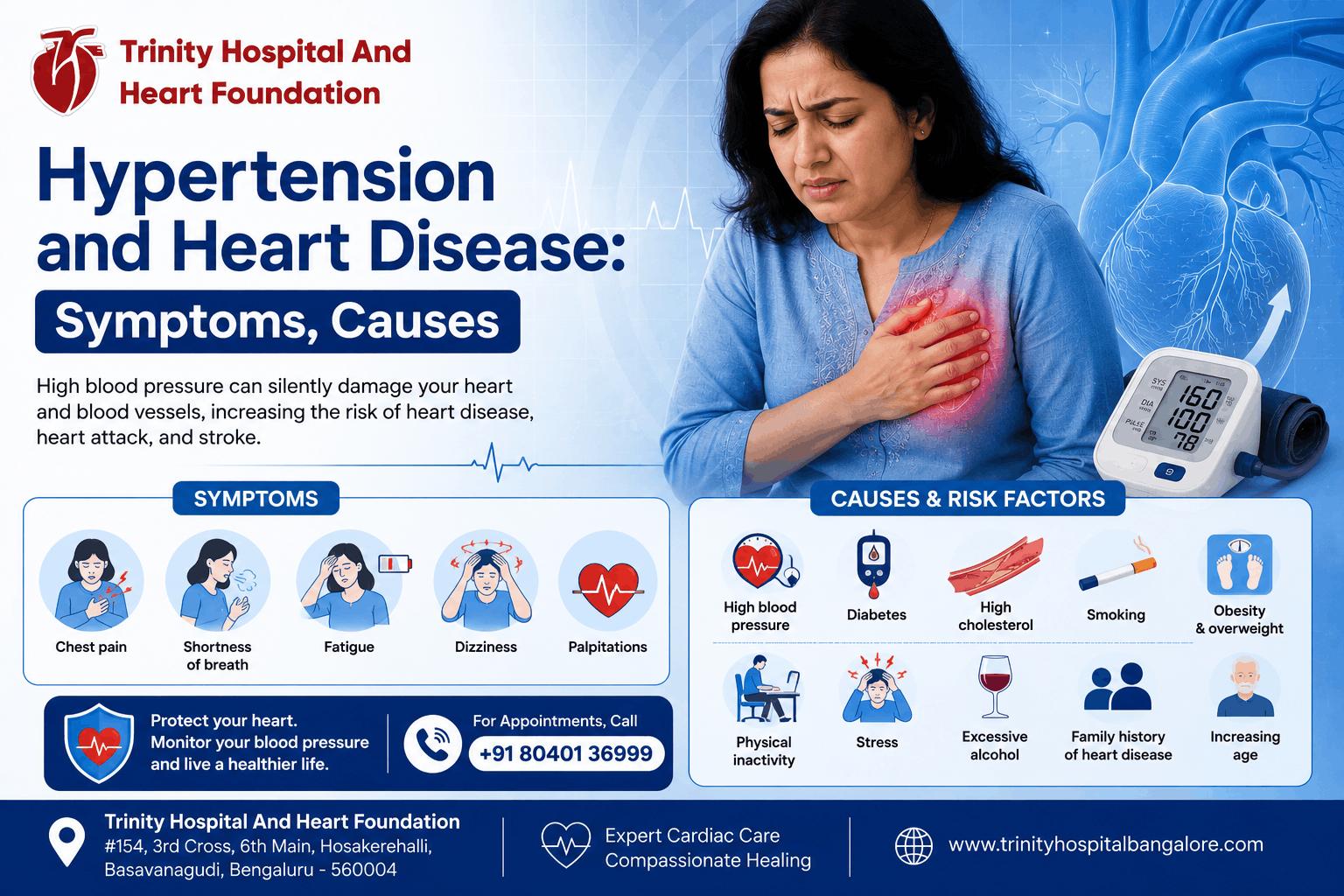
One of the most important points about hypertension heart disease symptoms is that high blood pressure itself may cause no noticeable symptoms.
When hypertension has contributed to cardiovascular complications, a person may experience symptoms such as:
- Shortness of breath
- Breathlessness, particularly during activity
- Chest pain
- Chest tightness or discomfort
- Fatigue
- Dizziness
- Palpitations
- Irregular heartbeat
- Reduced ability to perform usual physical activities
- Swelling of the legs or ankles in some heart conditions
These symptoms are not specific to hypertension or heart disease. They can have many causes, so they should not be used for self-diagnosis.
WHO notes that very high blood pressure can sometimes be associated with symptoms including chest pain, dizziness and difficulty breathing.
2. How Does High Blood Pressure Affect the Heart?
The heart has to work against the pressure within the arteries. If that pressure stays elevated, the heart may need to work harder to pump blood.
Over time, persistent hypertension may contribute to structural and functional changes.
Possible effects include:
- Increased workload on the heart
- Thickening of the heart muscle
- Changes in the arteries supplying the heart
- Increased risk of coronary artery disease
- Increased risk of heart failure
- Greater risk of certain rhythm abnormalities
This is why blood pressure and heart health are closely connected.
The risk may become greater when hypertension occurs alongside diabetes, high cholesterol, smoking, obesity, kidney disease or a family history of cardiovascular disease.
What Is Hypertensive Heart Disease?
Hypertensive heart disease is a broad term used for heart problems associated with long-standing high blood pressure.
It can involve different cardiovascular changes rather than representing one single condition.
For example, persistent hypertension can increase the workload of the left ventricle. Over time, the heart muscle may become thicker. If the underlying blood-pressure problem and associated cardiovascular risks remain uncontrolled, the heart may eventually have difficulty functioning efficiently.
Hypertension can also contribute to damage within the arteries, increasing cardiovascular risk.
Therefore, hypertension heart disease should be considered in the context of the patient’s overall cardiovascular health rather than as a single diagnosis based on a blood-pressure reading.
What Symptoms Should Not Be Ignored?
Although hypertension can be silent, certain cardiovascular symptoms deserve professional assessment, especially when they are new, persistent or worsening.
These may include:
- New or unexplained chest pain
- Persistent chest tightness
- Significant shortness of breath
- Breathlessness with progressively less activity
- New or recurrent palpitations
- Persistent dizziness or fainting
- Unusual fatigue
- Swelling of the legs or ankles
- Reduced exercise tolerance
If severe chest pain, significant breathing difficulty, fainting or other concerning symptoms occur, seek urgent medical care rather than assuming they are simply caused by high blood pressure.
Book Appointment
3. How Is Hypertensive Heart Disease Diagnosed?
A diagnosis is not made from blood pressure alone.
The evaluation may include:
Blood Pressure Assessment
Blood pressure may be checked repeatedly to establish whether hypertension is persistent. Home or ambulatory monitoring may also be recommended in selected situations.
Medical History and Examination
The doctor may ask about:
- Previous blood-pressure readings
- Family history
- Diabetes
- Cholesterol
- Smoking
- Physical activity
- Medications
- Sleep
- Symptoms such as chest discomfort or breathlessness
Cardiac Tests
Depending on the clinical situation, doctors may consider:
- ECG
- 2D echocardiography
- Exercise testing
- Holter monitoring
- Ambulatory blood-pressure monitoring
- Coronary CT or other cardiac imaging
- Blood tests
- Additional investigations when clinically indicated
Trinity Hospital’s cardiology services include diagnostic options such as ECG, echocardiography, TMT, Holter monitoring, CT coronary angiography and ambulatory BP monitoring.
The appropriate combination of tests depends on the patient’s symptoms, medical history and cardiovascular risk.
4. Hypertensive Heart Disease Treatment
Can Hypertension Heart Disease Be Treated Without Surgery?
In many patients, controlling blood pressure and managing cardiovascular risk factors are central to treatment. Hypertensive heart disease treatment depends on what changes or complications are present.
Non-Surgical Management
Depending on individual needs, treatment may include:
- Prescribed blood-pressure medicines
- Regular blood-pressure monitoring
- Reducing excess dietary salt
- Eating a balanced diet
- Regular physical activity appropriate to the person’s health
- Weight management where appropriate
- Avoiding tobacco
- Limiting harmful alcohol use
- Managing diabetes and cholesterol
- Addressing other cardiovascular risk factors
WHO recommends lifestyle measures alongside appropriate medical treatment for people with hypertension.
Importantly, patients should not stop, change or double blood-pressure medication without medical advice.
Medication Treatment
There are several classes of medicines used for hypertension. The choice depends on factors such as:
- Blood-pressure level
- Age
- Kidney function
- Diabetes
- Existing cardiovascular disease
- Other medications
- Individual response and tolerance
WHO’s hypertension guideline provides evidence-based recommendations for pharmacological treatment in adults with diagnosed hypertension.
When Are Interventional or Surgical Treatments Needed?
Hypertension itself is generally managed medically and through lifestyle measures rather than surgery.
However, long-standing hypertension can coexist with or contribute to other cardiovascular conditions that may require procedures.
Depending on the diagnosis, treatment may include:
- Coronary angioplasty
- Coronary artery bypass surgery
- Treatment for heart rhythm disorders
- Heart-failure interventions
- Valve procedures or surgery when a separate valve condition is present
The need for any procedure depends on the underlying cardiovascular diagnosis—not simply on having high blood pressure.
Trinity Hospital provides cardiac surgery and interventional cardiology services as part of its cardiac-care pathway.
Book Appointment
5. Cost and Related Considerations
The cost of evaluating or treating hypertension-related heart problems varies considerably between patients.
Potential cost factors include:
- Consultation
- Number and type of diagnostic tests
- Blood-pressure monitoring
- ECG or echocardiography
- Holter monitoring
- Medicines
- Treatment of associated conditions
- Hospital admission, if required
- Interventional procedures
- Cardiac surgery, when medically indicated
- Follow-up requirements
A person with uncomplicated hypertension may require a very different care plan from someone with hypertension and established coronary artery disease or heart failure.
Costs vary according to the patient’s condition, investigations, treatment plan, hospital stay and other individual factors. Exact costs should be discussed with the treating hospital after clinical evaluation.
Book Appointment
6. Why Choose Trinity Hospital and Heart Foundation?
Trinity Hospital and Heart Foundation is a multispecialty hospital in Basavanagudi, Bangalore, offering cardiac care along with emergency and critical-care services. The hospital describes its cardiac services as including interventional cardiology, cardiac surgery and diagnostic evaluation.
The cardiology pathway can involve assessment of:
- High blood pressure
- Coronary artery disease
- Heart rhythm problems
- Heart failure
- Chest discomfort
- Breathlessness
- Other cardiovascular concerns
Dr. B. G. Muralidhara
Dr. B. G. Muralidhara is listed by Trinity Hospital as its Chief Interventional Cardiologist. The hospital’s website identifies him as an interventional cardiology specialist involved in cardiac evaluation and treatment.
For patients with hypertension and possible cardiovascular complications, an evaluation-led approach helps determine whether routine blood-pressure management is appropriate or whether additional cardiac investigations are needed.
The objective is not to assume that every person with hypertension has heart disease, but to assess individual cardiovascular risk and symptoms appropriately.
7. When Should Someone With Hypertension See a Cardiologist?
Not everyone with high blood pressure requires a cardiology consultation, but medical evaluation becomes particularly important when hypertension occurs with cardiovascular symptoms, known heart disease or significant risk factors.
Consider discussing your condition with a doctor if you have:
- Persistent high blood-pressure readings
- Difficult-to-control hypertension
- Chest pain
- Chest tightness
- Shortness of breath
- New palpitations
- Irregular heartbeat
- Unexplained fatigue
- Dizziness or fainting
- Known coronary artery disease
- Previous heart attack
- Heart failure
- A strong family history of cardiovascular disease
The appropriate specialist and investigations depend on the individual’s circumstances.
Hypertension and Heart Care in Bangalore
High blood pressure can often be managed effectively when it is identified, monitored and treated appropriately. The important step is understanding your individual cardiovascular risk rather than relying on symptoms alone.
If you have persistent hypertension, cardiovascular symptoms or concerns about how high blood pressure may be affecting your heart, consider discussing them with a qualified healthcare professional.
Trinity Hospital and Heart Foundation in Basavanagudi, Bangalore, provides cardiology and cardiac-care services.
Phone: +91 80401 36999
Final Note
The connection between blood pressure and heart health is important because hypertension can remain unnoticed while gradually increasing cardiovascular risk. WHO reports that hypertension is frequently asymptomatic and that uncontrolled high blood pressure can contribute to heart disease, heart attack, heart failure and irregular heart rhythms.
At the same time, experiencing a symptom such as chest pain, fatigue, dizziness or palpitations does not automatically mean that hypertension has caused heart disease. Proper clinical assessment is needed to understand the cause.
Regular blood-pressure checks, adherence to prescribed treatment and appropriate cardiovascular follow-up can help reduce the risks associated with uncontrolled hypertension.
For patients in Basavanagudi and surrounding areas of Bangalore, Trinity Hospital and Heart Foundation provides cardiology and cardiac-care services for appropriate evaluation and treatment.
