
 24 Hour Emergency Aid
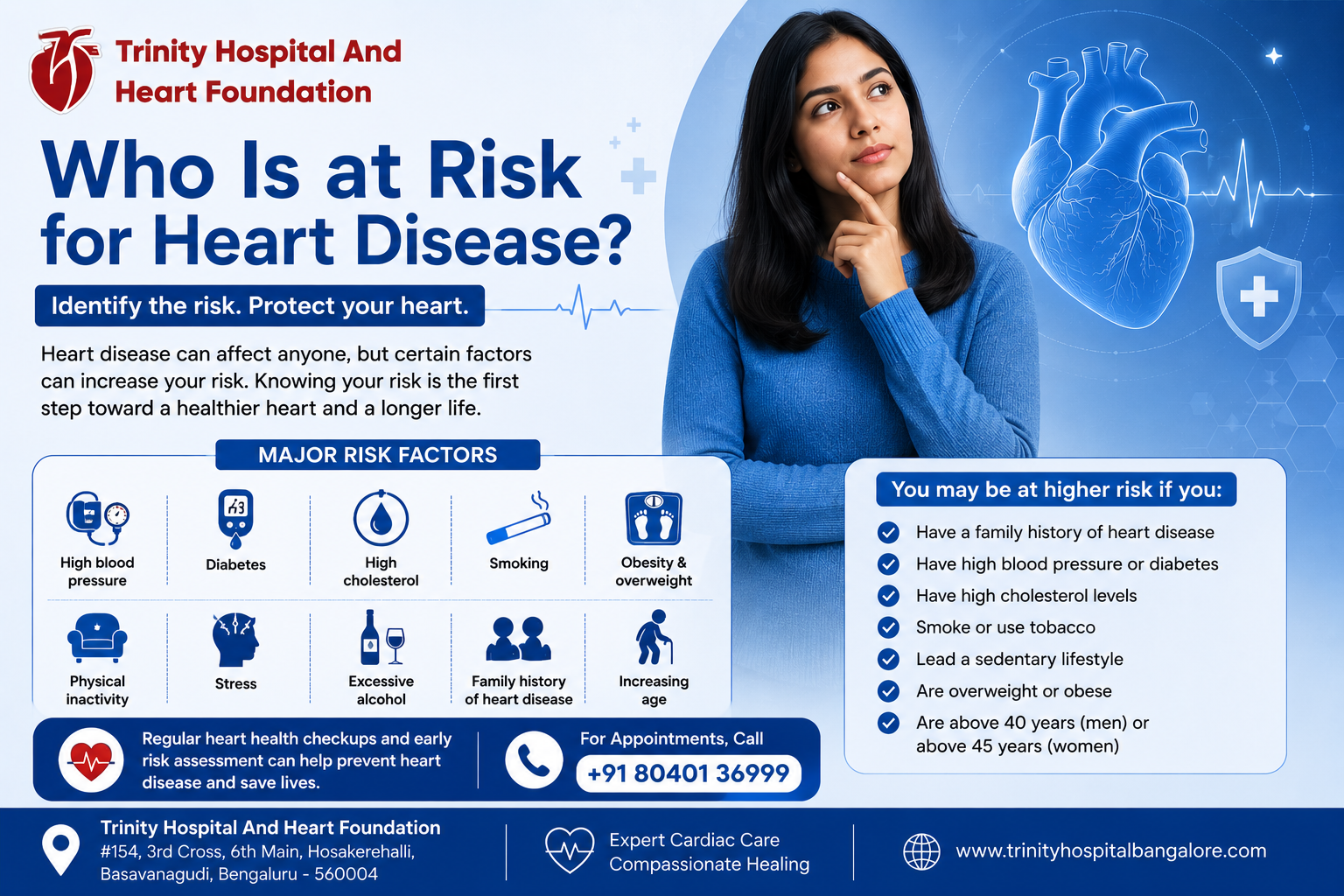
Heart disease does not affect only older adults or people who already have symptoms. A person’s cardiovascular risk can build gradually through a combination of heart disease risk factors, medical conditions, family history and lifestyle factors. Some risks can be changed, while others—such as age and inherited family history—cannot.
Understanding who is at risk for heart disease is therefore useful even when someone feels healthy. Cardiovascular disease can sometimes remain silent until a significant event occurs, which is why identifying risk factors and addressing them early is an important part of preventive care. The World Health Organization identifies tobacco use, unhealthy diet, physical inactivity and harmful alcohol use as major behavioural cardiovascular risk factors. These can contribute to raised blood pressure, blood glucose, blood lipids and overweight or obesity.
In India, cardiovascular risk is particularly relevant because hypertension, diabetes and other non-communicable diseases contribute substantially to the country’s health burden. WHO India identifies raised blood pressure as one of the most important cardiovascular risk factors.
For people living in Basavanagudi and surrounding areas, a heart health checkup Bangalore patients can access should not be viewed only as a response to symptoms. The appropriate evaluation depends on age, personal history, family history and other risk factors.
This article explains the major risk factors for heart disease, who may have a higher cardiovascular risk, how risk can be assessed and what steps can help support long-term heart health.
1. Understanding Who Is at Risk for Heart Disease
What Are the Major Heart Disease Risk Factors?
Heart-disease risk factors are characteristics, medical conditions or behaviours that increase the likelihood of developing cardiovascular disease. They can broadly be divided into modifiable and non-modifiable factors.
Book Appointment
Non-modifiable risk factors
These cannot be changed, but knowing about them can help guide appropriate prevention and screening.
They include:
- Increasing age
- Family history of cardiovascular disease
- Certain inherited conditions
- Sex-related differences in cardiovascular risk
- Previous cardiovascular disease
The American Heart Association includes increasing age, sex and family history among important cardiovascular risk factors.
Modifiable or manageable risk factors
These can often be addressed through lifestyle changes and/or medical treatment:
- High blood pressure
- High cholesterol
- Diabetes
- Smoking or tobacco exposure
- Overweight or obesity
- Physical inactivity
- Unhealthy diet
- Excessive alcohol use
- Some forms of chronic stress
- Poorly controlled metabolic conditions
WHO identifies tobacco use, unhealthy diet, physical inactivity and harmful alcohol use as major behavioural risk factors for cardiovascular disease.
Who Is at Higher Risk of Heart Disease?
There is no single profile of a person who develops heart disease. Risk can increase when several factors occur together.
For example, a person with diabetes and heart disease risk factors such as high blood pressure, smoking or high cholesterol may have a different overall risk profile from someone with only one risk factor.
Similarly, a person with a strong family history of heart disease may need to pay closer attention to other modifiable risks.
People who may have higher cardiovascular risk include those with:
- Persistent high blood pressure
- Diabetes or poorly controlled blood glucose
- High LDL cholesterol or other lipid abnormalities
- Smoking or tobacco use
- Overweight or obesity
- Physical inactivity
- A strong family history of early cardiovascular disease
- Previous heart disease or stroke
- Certain kidney or inflammatory conditions
- Multiple cardiovascular risk factors occurring together
The American Heart Association lists high blood pressure, high cholesterol, diabetes, smoking, overweight or obesity and family history among important heart-attack risk factors.
2. Major Risk Factors for Heart Disease
How Do High Blood Pressure and Heart Disease Connect?
High blood pressure and heart disease are closely connected. Persistent hypertension can increase the workload on the heart and contribute to damage involving the blood vessels.
Over time, uncontrolled high blood pressure can increase the risk of:
- Coronary artery disease
- Heart attack
- Heart failure
- Stroke
- Certain heart rhythm problems
WHO India identifies raised blood pressure as one of the most important risk factors for cardiovascular disease.
Because hypertension may have few or no noticeable symptoms, regular blood-pressure measurement can be important for identifying risk.
What Is the Relationship Between High Cholesterol and Heart Disease?
High cholesterol heart disease risk is another important consideration.
Excess LDL cholesterol can contribute to plaque formation in the arteries. Over time, plaque can narrow or affect blood flow through coronary arteries, increasing cardiovascular risk.
Risk assessment may therefore consider:
- LDL cholesterol
- HDL cholesterol
- Triglycerides
- Blood pressure
- Diabetes
- Smoking
- Family history
- Age and other clinical factors
A cholesterol result should be interpreted in the context of the person’s overall cardiovascular risk rather than in isolation.
Does Smoking Increase the Risk of Heart Disease?
Yes. Smoking and heart disease are strongly associated.
Tobacco can damage blood vessels and increase cardiovascular risk. WHO identifies tobacco use as a major behavioural risk factor for cardiovascular disease and states that tobacco contributes to heart disease and stroke.
Risk is not limited to cigarette smoking. Other forms of tobacco exposure can also be harmful.
Stopping tobacco use is an important cardiovascular-health measure, although the approach to quitting should be appropriate to the individual’s circumstances.
How Does Obesity Affect Heart Disease Risk?
Obesity and heart disease are connected through several pathways. Excess body weight can occur alongside:
- High blood pressure
- Diabetes
- Abnormal cholesterol
- Sleep apnea
- Reduced physical activity
These conditions can collectively increase cardiovascular risk.
Weight should not be assessed only by appearance or a single number on a weighing scale. Healthcare professionals may consider body measurements, blood pressure, laboratory findings, medical history, medications, lifestyle and other factors when assessing overall risk.
Does Diabetes Increase the Risk of Heart Disease?
Yes. Diabetes and heart disease are closely linked.
Persistently elevated blood glucose can affect blood vessels and is associated with an increased risk of cardiovascular disease. The American Heart Association identifies diabetes as a major controllable cardiovascular risk factor. When diabetes occurs together with high blood pressure, smoking or other risks, cardiovascular risk may be greater.
For this reason, people with diabetes may need regular assessment of blood pressure, cholesterol and other cardiovascular risk factors as advised by their healthcare professional.
Can Young Adults Be at Risk for Heart Disease?
Yes. Heart disease in young adults is possible, although age remains an important factor in cardiovascular risk.
Younger adults may have cardiovascular risk associated with:
- Smoking or tobacco use
- Diabetes
- High blood pressure
- Abnormal cholesterol
- Obesity
- Physical inactivity
- Family history
- Certain inherited conditions
- Other medical conditions
The American Heart Association notes that younger people can also develop coronary artery disease and that preventive measures earlier in life may have long-term benefits.
Being young should therefore not be treated as a guarantee of low cardiovascular risk.
At the same time, young adults without symptoms or risk factors do not necessarily need extensive cardiac testing. The appropriate evaluation depends on individual circumstances.
What About Women and Heart Disease Risk?
Women heart disease risk factors can overlap with those seen in men, but some considerations are particularly relevant to women.
These may include:
- Diabetes
- High blood pressure
- Smoking
- Obesity
- Family history
- Physical inactivity
- Menopause and age-related changes
- Certain pregnancy-related complications
- Some inflammatory or autoimmune conditions
The American Heart Association identifies a history of preeclampsia or early menopause among factors that can contribute to cardiovascular risk assessment.
Women should also be aware that cardiovascular symptoms may sometimes be less typical. During a heart attack, women can experience symptoms such as shortness of breath, nausea or vomiting, and back or jaw discomfort in addition to chest discomfort.
What Symptoms May Suggest a Heart Problem?
Having a risk factor does not mean that a person has heart disease. Conversely, some cardiovascular conditions can be present without obvious symptoms.
Possible symptoms that warrant medical assessment include:
- Chest pain or pressure
- Breathlessness
- Shortness of breath during activity
- Unexplained fatigue
- Palpitations
- Dizziness or fainting
- Reduced exercise tolerance
- Swelling of the legs or ankles
A symptom such as chest pain can have many causes and should not automatically be attributed to heart disease.
If symptoms suggest a possible heart attack or another acute cardiovascular problem, immediate medical attention is appropriate. WHO lists chest discomfort, breathing difficulty, light-headedness and other symptoms among possible heart-attack presentations.
3. How Is Cardiovascular Risk Assessed?
A cardiac risk assessment Bangalore patients receive should be based on individual circumstances rather than a standard set of tests for everyone.
A healthcare professional may review:
Medical history
- Age
- Previous heart disease
- Diabetes
- Blood pressure
- Cholesterol
- Kidney disease
- Other medical conditions
Family history
A family history of heart disease, particularly cardiovascular disease occurring at a relatively young age in close relatives, may influence risk assessment.
Lifestyle
The assessment may include questions about:
- Smoking
- Tobacco use
- Physical activity
- Diet
- Alcohol
- Sleep
- Weight changes
Diagnostic tests
Depending on the person’s symptoms and risk profile, a doctor may consider:
- Blood pressure measurement
- Blood glucose testing
- Lipid profile
- ECG
- Echocardiography
- Exercise testing
- Holter monitoring
- Other cardiac imaging or investigations when indicated
Trinity Hospital’s website describes cardiac evaluation services including ECG, echocardiography, TMT, Holter monitoring, CT coronary angiography and other diagnostic services.
Not every person needs every test. Testing should be based on clinical assessment.
4. How Can Heart Disease Risk Be Reduced?
Many heart disease risk factors can be addressed.
General measures may include:
- Avoiding tobacco
- Maintaining regular physical activity appropriate to your health
- Following a balanced diet
- Limiting excess salt and unhealthy fats
- Maintaining a healthy weight
- Monitoring blood pressure
- Managing diabetes
- Checking cholesterol when appropriate
- Limiting harmful alcohol use
- Following prescribed medicines
- Attending recommended follow-up appointments
WHO states that stopping tobacco use, reducing dietary salt, eating more fruit and vegetables, regular physical activity and avoiding harmful alcohol use can help reduce cardiovascular risk.
These measures should be adapted to the individual’s health rather than treated as a substitute for medical care.
5. Heart Health Checkup and Treatment Options
When Is a Heart Health Checkup Appropriate?
A heart health checkup Bangalore residents seek may be appropriate when a person has known cardiovascular risk factors, relevant symptoms, a strong family history or an existing cardiovascular condition.
The purpose is not necessarily to perform every available cardiac test. Instead, the goal is to identify relevant risk factors and determine whether further evaluation is appropriate.
Non-invasive evaluation
Depending on the situation, this may include:
- Blood-pressure assessment
- Blood tests
- ECG
- Echocardiography
- Exercise testing
- Holter monitoring
Interventional or surgical treatment
If evaluation identifies a cardiovascular condition that requires treatment, options depend on the diagnosis.
They may include:
- Medicines
- Coronary angioplasty
- Stenting
- Coronary artery bypass surgery
- Treatment for rhythm disorders
- Valve procedures
- Other cardiac interventions
A risk factor alone does not mean that a procedure or surgery is required.
6. Cost and Related Considerations
The cost of a heart disease screening Bangalore patient receives can vary depending on the person’s medical history and the tests considered appropriate.
Factors may include:
- Consultation
- Blood tests
- ECG
- Echocardiography
- Exercise testing
- Holter monitoring
- Advanced cardiac imaging
- Additional specialist consultations
- Hospital admission, if necessary
- Treatment of a diagnosed cardiovascular condition
A basic preventive assessment may be very different from an evaluation for chest pain or an established heart condition.
Costs vary according to the patient’s condition, investigations required, treatment plan and hospital stay. A healthcare professional should determine which tests are appropriate before their cost can be estimated accurately.
7. Why Consider Trinity Hospital and Heart Foundation?
Trinity Hospital and Heart Foundation is a multispecialty hospital located in Basavanagudi, Bengaluru, with cardiac care, emergency and critical-care services. The hospital describes its cardiac service as providing evaluation of chest pain, breathlessness and cardiac risk factors, along with angiography, angioplasty and structured follow-up.
The hospital’s website lists Dr. B. G. Muralidhara as Head of Cardiology and identifies him as an interventional cardiologist.
For cardiovascular risk assessment, an evaluation-based approach is important. Not everyone with a family history, high blood pressure or another risk factor requires the same investigation.
The clinical objective is to understand:
- Which risk factors are present
- Whether symptoms require investigation
- Whether additional cardiac testing is appropriate
- Whether existing conditions need treatment
- What follow-up may be appropriate
This approach helps keep cardiac care focused on the patient’s individual medical circumstances.
Book Appointment
8. When Should You Consider a Cardiac Risk Assessment?
You do not need to wait for a heart-related symptom to learn about your cardiovascular risk.
Consider discussing your risk with a healthcare professional if you have:
- High blood pressure
- Diabetes
- High cholesterol
- Smoking or tobacco exposure
- Overweight or obesity
- A strong family history of heart disease
- Previous cardiovascular disease
- Multiple risk factors occurring together
- Symptoms such as chest discomfort, breathlessness or unexplained palpitations
For patients looking for a cardiologist Bangalore or a cardiologist Basavanagudi, Trinity Hospital and Heart Foundation provides cardiology services in Basavanagudi.
Trinity Hospital and Heart Foundation
Teachers College Circle, near Rashtriya Vidyalaya Road, Basavanagudi, Bengaluru, Karnataka 560004
Phone: +91 80401 36999
Final Note
Knowing your heart disease risk factors is not about assuming that you will develop heart disease. It is about understanding which factors may increase your risk and identifying those that can potentially be addressed.
Some factors—such as age and family history—cannot be changed. Others, including smoking, high blood pressure, high cholesterol, diabetes, physical inactivity and obesity, can often be managed with appropriate lifestyle measures and medical care.
WHO emphasises that cardiovascular disease prevention involves addressing behavioural and metabolic risk factors and identifying people at higher risk early enough for appropriate management.
