

 24 Hour Emergency Aid
Sleep is often treated as a matter of energy and concentration, but it is also closely connected with cardiovascular health. The relationship is not simply about feeling tired after a poor night’s sleep. Sleep duration, regularity and quality can influence several factors associated with heart health, including blood pressure, metabolism, stress and inflammation. The American Heart Association includes healthy sleep among its Life’s Essential 8 measures for cardiovascular health and recommends that most adults aim for an average of 7–9 hours of sleep each night.
This makes sleep and heart health an important subject for people who regularly sleep too little, have disrupted sleep, or experience symptoms such as loud snoring, repeated nighttime awakenings or daytime sleepiness.
The connection can work in both directions. Poor sleep may contribute to cardiovascular risk factors, while conditions such as heart disease can themselves interfere with comfortable, restorative sleep. Sleep disorders including insomnia and obstructive sleep apnea are also associated with cardiovascular concerns.
For people in Basavanagudi and surrounding areas of Bangalore, understanding this relationship can be useful when discussing persistent sleep problems or cardiovascular concerns with a healthcare professional. Trinity Hospital and Heart Foundation provides cardiology and emergency and critical-care services, with Dr. B. G. Muralidhara listed by the hospital as its Chief Interventional Cardiologist.
Importantly, poor sleep does not automatically mean that a person has heart disease. Likewise, sleeping poorly on an occasional night is not the same as having a chronic sleep disorder. The focus should be on persistent patterns, associated symptoms and individual risk factors.
Book Appointment
2. Understanding the Link Between Sleep and the Heart
How Does Lack of Sleep Affect the Heart?
Sleep deprivation refers to not getting enough sleep, while poor-quality or fragmented sleep can prevent the body from getting adequate restorative rest.
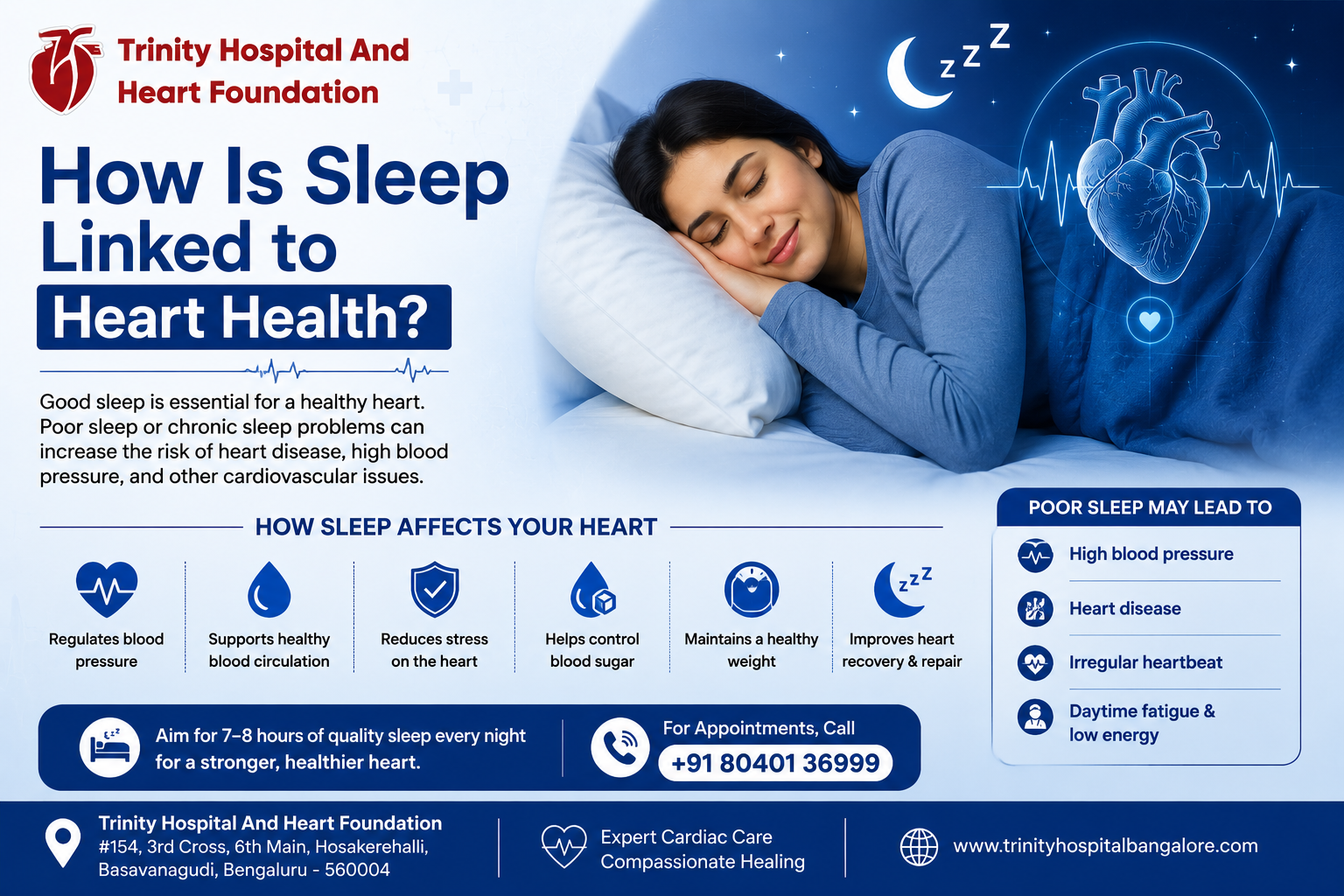
The effects of lack of sleep can extend beyond daytime tiredness. Persistent sleep problems may be associated with cardiovascular risk factors such as high blood pressure, abnormal glucose regulation, obesity, stress and inflammation. The American Heart Association notes that insufficient or irregular sleep is linked with cardiovascular risk factors and that sleep disorders are associated with a higher risk of cardiovascular disease.
Common signs that sleep may not be adequate include:
- Feeling excessively tired during the day
- Difficulty concentrating
- Irritability or mood changes
- Frequent nighttime awakenings
- Difficulty falling or staying asleep
- Loud snoring
- Waking up gasping or choking
- Persistent daytime sleepiness
- Waking without feeling refreshed
These symptoms do not establish a diagnosis. They may have several possible causes and should be considered in the context of a person’s overall health.
Sleep and High Blood Pressure
The relationship between sleep and high blood pressure is particularly important. Poor sleep can be associated with higher blood pressure and other cardiovascular risk factors.
This is why lack of sleep and high blood pressure should not always be viewed as unrelated issues. People who regularly sleep poorly and also have hypertension may benefit from discussing both concerns with their healthcare professional.
Sleep Deprivation and Hypertension
The phrase sleep deprivation hypertension describes an area of concern rather than a diagnosis. Chronic inadequate sleep may contribute to cardiovascular risk, but blood pressure can also be affected by genetics, diet, physical activity, medications, stress, kidney disease and many other factors.
Similarly, poor sleep high blood pressure is not a reason to assume that improving sleep alone will control hypertension. Blood pressure should be assessed and managed according to medical advice.
Can Insomnia Affect Heart Health?
Insomnia and heart disease have been studied because persistent difficulty falling asleep, staying asleep or obtaining restorative sleep may be associated with cardiovascular risk.
People experiencing insomnia and heart problems should discuss both issues with their healthcare provider rather than assuming one is necessarily causing the other.
Possible contributors to poor sleep include:
- Stress
- Anxiety
- Irregular sleep schedules
- Certain medicines
- Medical conditions
- Sleep apnea
- Persistent pain
- Environmental factors
Chronic insomnia heart disease associations are an area of ongoing research. The American Heart Association recognises insomnia among common sleep disorders and notes that sleep disorders can be associated with cardiovascular risk.
How Does Sleep Apnea Affect the Heart?
Sleep apnea is different from simply choosing to sleep fewer hours. It is a sleep disorder in which breathing repeatedly becomes interrupted during sleep.
Possible clues include:
- Loud or persistent snoring
- Gasping or choking during sleep
- Witnessed pauses in breathing
- Morning headaches
- Excessive daytime sleepiness
- Difficulty concentrating
- Waking repeatedly during the night
Sleep apnea heart failure is an important area of cardiovascular medicine because obstructive sleep apnea has been associated with cardiovascular disease and can contribute to cardiovascular risk factors. The American Heart Association reports associations between obstructive sleep apnea, high blood pressure, stroke and coronary artery disease, and notes evidence linking it with changes associated with heart failure.
People with cardiovascular risk factors or established cardiovascular disease may therefore need assessment for possible sleep disorders when symptoms suggest them.
3. Types of Sleep-Related Heart Considerations and Treatment
There is no single treatment for the relationship between sleep and cardiovascular health. Management depends on the underlying sleep problem, cardiovascular condition and individual risk factors.
Non-Surgical and Lifestyle Approaches
For people without a diagnosed sleep disorder, practical measures may include:
- Maintaining a consistent sleep and wake schedule
- Allowing adequate time for sleep
- Limiting habits that interfere with sleep
- Keeping the bedroom comfortable and conducive to sleep
- Discussing persistent insomnia with a healthcare professional
- Managing cardiovascular risk factors such as blood pressure, cholesterol and blood glucose
- Following prescribed treatment for existing heart conditions
The American Heart Association recommends an average of 7–9 hours of sleep for adults, while recognising that individual needs vary.
Treatment of Sleep Disorders
When a sleep disorder is suspected, treatment depends on the diagnosis.
For obstructive sleep apnea, treatment may include measures such as:
- Positive airway pressure therapy, including CPAP
- Lifestyle measures where appropriate
- Oral appliances for selected patients
- Other interventions when medically indicated
The American Heart Association notes that sleep apnea can be treated with CPAP, lifestyle changes and, in selected situations, surgical approaches.
Cardiovascular Treatment
If a patient has an underlying heart condition, treatment is directed at that condition.
Depending on the diagnosis, cardiac management may involve:
- Medicines
- Blood-pressure management
- Rhythm monitoring and treatment
- Coronary angiography
- Angioplasty
- Cardiac surgery when indicated
Trinity Hospital provides cardiac evaluation and interventional services, including angiography and angioplasty.
The presence of a sleep problem does not automatically mean that a cardiac procedure is required.
4. Cost and Related Considerations
The cost of investigating sleep or heart-related concerns varies according to what evaluation is medically appropriate.
Potential cost factors include:
- Consultation
- Blood pressure assessment
- Blood tests
- ECG
- Echocardiography
- Holter or rhythm monitoring when indicated
- Sleep assessment or sleep study when appropriate
- Additional cardiac imaging
- Medicines
- Treatment of an identified cardiovascular condition
- Hospitalisation, if required
- Interventional or surgical treatment in selected cases
Someone with uncomplicated insomnia may require a very different evaluation from a patient with suspected sleep apnea and established heart disease.
Costs vary according to the patient’s condition, investigations required, treatment selected, hospital stay and other individual factors. A consultation is needed to determine which tests or treatments are appropriate.
5. Why Choose Trinity Hospital and Heart Foundation?
Trinity Hospital and Heart Foundation is a multispecialty hospital in Basavanagudi, Bangalore, with cardiology, cardiac surgery and emergency and critical-care services. Its website lists Dr. B. G. Muralidhara as Chief Interventional Cardiologist.
For patients with concerns involving both sleep and cardiovascular health, an evaluation-driven approach is important because symptoms can have overlapping causes.
The hospital’s cardiac services provide access to:
- Cardiovascular consultation
- Cardiac diagnostic evaluation
- Interventional cardiology
- Coronary angiography
- Angioplasty
- Cardiac surgery
- Emergency and critical care
- Ongoing cardiac follow-up
Book Appointment
Dr. B. G. Muralidhara
Dr. B. G. Muralidhara is listed by Trinity Hospital as its Chief Interventional Cardiologist. The hospital describes his clinical work as including diagnostic angiography, angioplasty and long-term cardiac care planning.
When sleep concerns occur alongside cardiovascular symptoms or known heart disease, the objective of consultation is to determine whether further cardiac assessment or evaluation of a possible sleep disorder is appropriate.
6. CTA: When Should You Discuss Sleep and Heart Health With a Doctor?
Occasional poor sleep is common. However, persistent sleep problems deserve attention, particularly when they occur alongside cardiovascular risk factors or symptoms.
Consider discussing your concerns with a healthcare professional if you have:
- Persistent difficulty sleeping
- Repeated nighttime awakenings
- Loud or habitual snoring
- Gasping or choking during sleep
- Significant daytime sleepiness
- Difficult-to-control blood pressure
- Recurrent palpitations
- Known heart disease with worsening symptoms
- Breathlessness or other unexplained symptoms
A sleep problem does not necessarily indicate heart disease, and cardiovascular symptoms should not automatically be attributed to poor sleep.
For patients in Basavanagudi, Bangalore, Trinity Hospital and Heart Foundation provides cardiology and cardiac-care services.
Phone: +91 80401 36999
Final Note
The connection between sleep deprivation, lack of sleep and cardiovascular health is increasingly recognised. Sleep is not simply a period of rest; adequate sleep, regularity and sleep quality are important components of overall health and are included by the American Heart Association among its key measures of cardiovascular health.
At the same time, sleep problems should not be used to self-diagnose a heart condition. Persistent insomnia, suspected sleep apnea, high blood pressure, palpitations or other cardiovascular concerns deserve appropriate professional assessment.
