
Heart valves play an important role in maintaining normal blood circulation. They open and close with each heartbeat, helping blood move through the heart in the correct direction. When a valve becomes narrowed, stiff, damaged, or unable to close properly, it can lead to heart valve disease.
Some people with early valve disease may have no noticeable symptoms. As the condition progresses, patients may develop breathlessness, fatigue, chest discomfort, dizziness, fainting, swelling of the legs, or an irregular heartbeat. Recognising these symptoms of heart valve problems can help patients seek timely cardiac evaluation.
At Trinity Hospital & Heart Foundation, Basavanagudi, Bengaluru, patients can undergo comprehensive assessment for suspected valvular heart disease, including clinical evaluation and appropriate cardiac investigations.
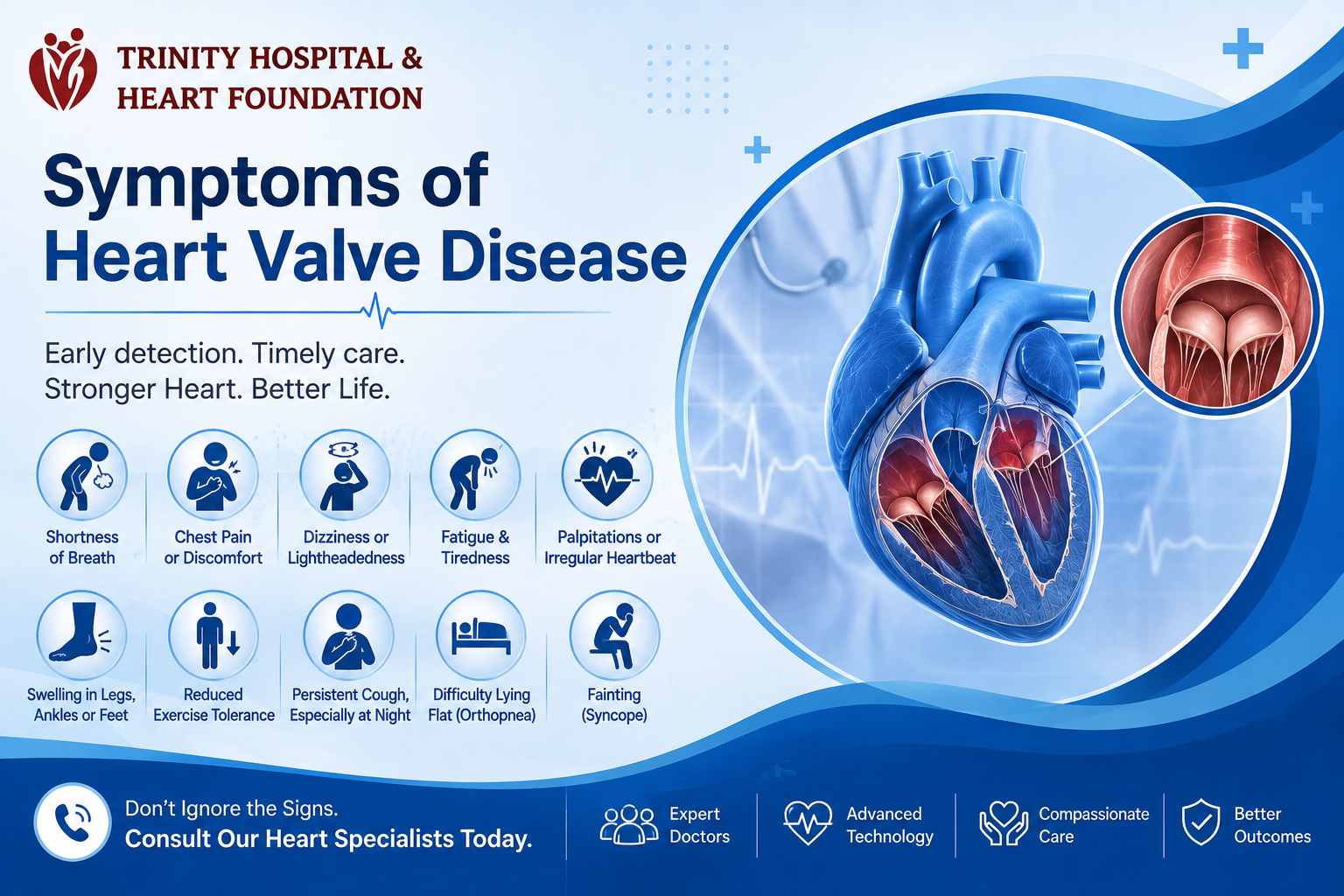
Heart valve disease occurs when one or more of the heart’s four valves do not function normally.
The four heart valves are:
Valve problems can occur when a valve becomes too narrow or fails to close completely.
Valvular heart disease is a broad term used for conditions affecting one or more heart valves.
The main types of valve dysfunction include:
Stenosis occurs when a valve becomes narrowed and does not open fully. This can restrict blood flow through the heart.
Regurgitation occurs when a valve does not close properly, allowing some blood to flow backward.
In some conditions, a valve leaflet may bulge or move abnormally, affecting its ability to function normally.
The severity of valvular disease can range from mild and requiring only monitoring to severe disease requiring valve repair or replacement.
The symptoms of heart valve problems depend on which valve is affected and how severe the disease has become.
Common symptoms include:
Some patients may initially notice symptoms only while exercising. As valve disease progresses, symptoms can occur even during routine activities or at rest.
Recognising the signs of heart valve problems can be difficult because they may resemble symptoms of other cardiovascular or respiratory conditions.
Early warning signs can include:
A heart murmur detected during a routine examination may also prompt further evaluation.
Not every heart murmur indicates significant valve disease, but an abnormal murmur may require an echocardiogram or other investigation.
Different valve conditions can produce different symptoms.
Aortic Valve Disease
Aortic valve disease may occur when the valve becomes narrowed or leaky.
Patients may experience:
Severe aortic stenosis requires careful assessment because it can significantly affect the heart’s ability to pump blood.
The mitral valve is located between the left atrium and left ventricle.
Mitral valve problems can cause:
Symptoms may become more noticeable during physical activity or when lying down.
Tricuspid valve disease affects blood flow through the right side of the heart.
Possible symptoms include:
Tricuspid valve disease can occur alongside other valve disorders.
Pulmonary valve disease affects the valve between the right ventricle and pulmonary artery.
Depending on its severity, patients may experience:
Pulmonary valve disorders can sometimes be associated with congenital heart conditions.
Not all valve issues require immediate treatment.
Patients with mild disease may have no symptoms. Doctors may recommend:
Patients may require more frequent monitoring, particularly if symptoms develop or heart function changes.
Severe disease may cause significant symptoms and affect heart function. Depending on the affected valve and underlying condition, treatment may involve valve repair, valve replacement, or a catheter-based procedure.
The timing of intervention should be determined by a cardiologist or multidisciplinary Heart Team.
Patients should arrange a cardiac evaluation if they develop persistent or unexplained:
Sudden severe chest pain, severe breathlessness, fainting, or other acute symptoms require urgent medical attention.
There are several causes of valvular heart disease.
Common causes include:
The cause depends on the specific valve affected and the patient’s medical history.
Congenital valvular disease refers to valve abnormalities that are present from birth.
Some congenital valve problems may remain undetected for years, while others can cause symptoms during childhood or adulthood.
Examples include:
Patients with known congenital valve abnormalities may require lifelong cardiac monitoring.
A heart valve infection, commonly known as infective endocarditis, occurs when microorganisms infect the inner lining of the heart or a heart valve.
Possible symptoms include:
A suspected valve infection requires prompt medical assessment because untreated infection can damage the valve and cause serious complications.
Valvular disease can affect one or multiple heart valves.
The major forms include:
The severity and treatment depend on the affected valve, degree of dysfunction, symptoms, and effect on heart function.
The aortic valve controls blood flow from the left ventricle into the aorta.
Two important forms of aortic valve disease are:
The valve becomes narrowed, making it harder for blood to leave the heart.
Patients may develop:
Severe symptomatic aortic stenosis may require valve replacement.
The valve does not close completely, allowing blood to flow backward into the left ventricle.
Over time, significant regurgitation can place additional strain on the heart.
The mitral valve regulates blood flow between the left atrium and left ventricle.
Common forms include:
The valve becomes narrowed, restricting blood flow into the left ventricle.
The valve does not close properly, allowing blood to flow backward.
Depending on severity, patients may require monitoring, medications, valve repair, or valve replacement.
Tricuspid valve problems affect blood flow through the right side of the heart.
Tricuspid regurgitation is one of the more common tricuspid valve disorders and may occur together with other heart conditions.
Symptoms can include:
The pulmonary valve regulates blood flow from the right ventricle toward the pulmonary artery.
Pulmonary valve disorders are less common in adults than some other valve conditions and may be associated with congenital heart disease.
Treatment depends on the severity and underlying cause.
Triple valve disease refers to clinically significant disease affecting three heart valves.
Multiple-valve disease is more complex than disease affecting a single valve because the heart may have to compensate for abnormalities in several areas of blood flow.
Patients may experience:
Treatment requires detailed imaging and multidisciplinary evaluation.
The Heart Team considers the severity of each valve problem, heart function, symptoms, age, overall health, and procedural risks when planning treatment.
Patients sometimes search for blocked heart valve when they are experiencing symptoms related to valve narrowing.
A valve itself is not usually described as “blocked” in the same way as a coronary artery. The medically appropriate term for significant narrowing of a valve is stenosis.
For example, a severely narrowed aortic valve is called aortic stenosis.
This distinction is important because:
The treatments for these conditions are different and require separate evaluation.
The phrase valves in arteries can sometimes create confusion.
The heart contains four primary valves that regulate blood flow through the chambers and outflow tracts. Arteries themselves generally do not contain valves like those found in the heart.
The pulmonary valve and aortic valve are located at the exits of the right and left ventricles respectively, controlling blood flow into the pulmonary artery and aorta.
Diagnosis begins with a medical history and physical examination.
A doctor may listen to the heart for abnormal sounds or murmurs and assess symptoms such as breathlessness, chest pain, dizziness, or swelling.
Further investigations may include:
An echocardiogram uses ultrasound to assess the structure and function of the heart and valves. It can help determine whether a valve is narrowed or leaking and assess the effect on heart function.
An ECG records the electrical activity of the heart and may identify rhythm abnormalities or other cardiac changes.
A chest X-ray may provide information about the heart size and lungs in selected patients.
Advanced imaging may be recommended when additional anatomical information is required.
Cardiac catheterization may be performed in selected patients to assess pressures within the heart or evaluate coronary arteries before an intervention.
A diagnosis alone does not determine whether treatment is required.
Doctors consider:
Regular monitoring may be appropriate for patients with mild disease, while severe symptomatic disease may require intervention.
The appropriate heart valve blockage treatment depends on what patients mean by “blockage” and the actual diagnosis.
For valve stenosis, treatment options can include:
For example, patients with severe symptomatic aortic stenosis may be evaluated for surgical aortic valve replacement or transcatheter aortic valve replacement, depending on their anatomy, age, risk profile, and Heart Team assessment.
When a valve requires intervention, doctors may consider either repair or replacement.
The surgeon modifies the patient’s existing valve to improve its function.
Potential advantages include preserving native valve tissue in suitable cases.
The diseased valve is replaced with an artificial valve.
Replacement options can include:
The appropriate option depends on the affected valve and individual patient factors.
Treatment may become necessary when valve disease:
Importantly, treatment is not determined by symptoms alone. Some patients with severe valve disease may have few symptoms, which is why regular monitoring and echocardiographic assessment can be important.
At Trinity Hospital & Heart Foundation, Basavanagudi, Bengaluru, patients can receive comprehensive evaluation for suspected heart valve disease and other cardiovascular conditions.
The cardiac care pathway may include:
The recommended treatment is based on the patient’s diagnosis, symptoms, valve anatomy, heart function, and overall health rather than on a single symptom or test result.
The causes of valvular heart disease vary depending on the valve involved, the patient’s age, medical history, and whether the condition developed during childhood or adulthood.
Common causes include:
Some valve disorders are present from birth, while others develop gradually over many years.
Certain factors may increase the likelihood of developing valvular heart disease, including:
Having a risk factor does not necessarily mean that a person will develop valve disease. Regular medical assessment is particularly important when symptoms or a known valve abnormality is present.
Patients with mild or moderate heart valve disease may be able to continue their usual activities with appropriate medical supervision.
Long-term management may involve:
The frequency of follow-up depends on the type and severity of the valve problem.
Not every form of valvular disease can be prevented, particularly congenital valve abnormalities and some age-related changes.
However, patients can reduce certain cardiovascular risks by:
Patients with an established valve disorder should follow the monitoring schedule recommended by their cardiologist.
Patients with known or suspected valve disease should seek medical evaluation if they develop:
Sudden severe chest pain, severe breathing difficulty, loss of consciousness, or other acute symptoms require urgent medical attention.
You should consider a cardiology evaluation if:
Early assessment can help determine whether the valve problem requires observation, medical treatment, or an intervention.
Follow-up is an important part of managing heart valve disease.
Depending on the condition, your cardiologist may monitor:
Echocardiography is particularly useful for monitoring changes in valve function over time.
Patients seeking evaluation for valvular heart disease at Trinity Hospital may travel from several parts of Bengaluru, including:
Trinity Hospital & Heart Foundation is located in Basavanagudi, Bengaluru and is accessible through major roads and public transportation.
Nearby landmarks include:
Patients can reach the hospital by Metro, BMTC buses, taxis, or private vehicles.
Patients with suspected heart valve disease need accurate diagnosis and appropriate assessment of disease severity before treatment decisions are made.
At Trinity Hospital & Heart Foundation, the cardiac care pathway may include:
The appropriate treatment depends on the affected valve, severity of disease, symptoms, heart function, anatomy, age, and overall health.
If you have persistent breathlessness, chest discomfort, dizziness, fainting, palpitations, unexplained fatigue, or have been told that you have a heart murmur or valve abnormality, a cardiology evaluation can help identify the underlying cause.
At Trinity Hospital & Heart Foundation, Basavanagudi, patients can undergo comprehensive evaluation for heart valve disease, including appropriate imaging and assessment of valve function. The cardiac team can then determine whether monitoring, medicines, valve repair, valve replacement, or a catheter-based procedure is appropriate.
Recognising the symptoms of heart valve disease can help patients seek appropriate evaluation before valve problems significantly affect heart function. Breathlessness, fatigue, chest discomfort, dizziness, fainting, palpitations, and swelling can occur with clinically significant valve disease, although some patients remain symptom-free for a considerable period.
Valvular heart disease can result from age-related changes, congenital abnormalities, rheumatic disease, infection, or other medical conditions. Diagnosis generally requires clinical assessment and appropriate cardiac imaging, particularly echocardiography.
At Trinity Hospital & Heart Foundation, Basavanagudi, patients can receive comprehensive evaluation for heart valve disease, with treatment decisions based on the specific valve involved, disease severity, symptoms, heart function, and overall health
 24 Hour Emergency Aid