

Recovery after angioplasty varies depending on the patient’s overall health, the complexity of the procedure, and whether the angioplasty was performed as an emergency treatment following a heart attack. Most patients can walk within a few hours after the procedure and return to routine activities within a few days. However, long-term recovery also involves lifestyle modifications, medication adherence, dietary changes, and regular cardiac follow-up. At Trinity Hospital Bangalore, patients receive comprehensive guidance on angioplasty recovery time, care after angioplasty, and long-term heart health management under specialist supervision.
Angioplasty is a minimally invasive procedure performed to improve blood flow through narrowed or blocked coronary arteries.
Following treatment, patients often have questions such as:
The recovery journey involves both short-term healing and long-term heart care.
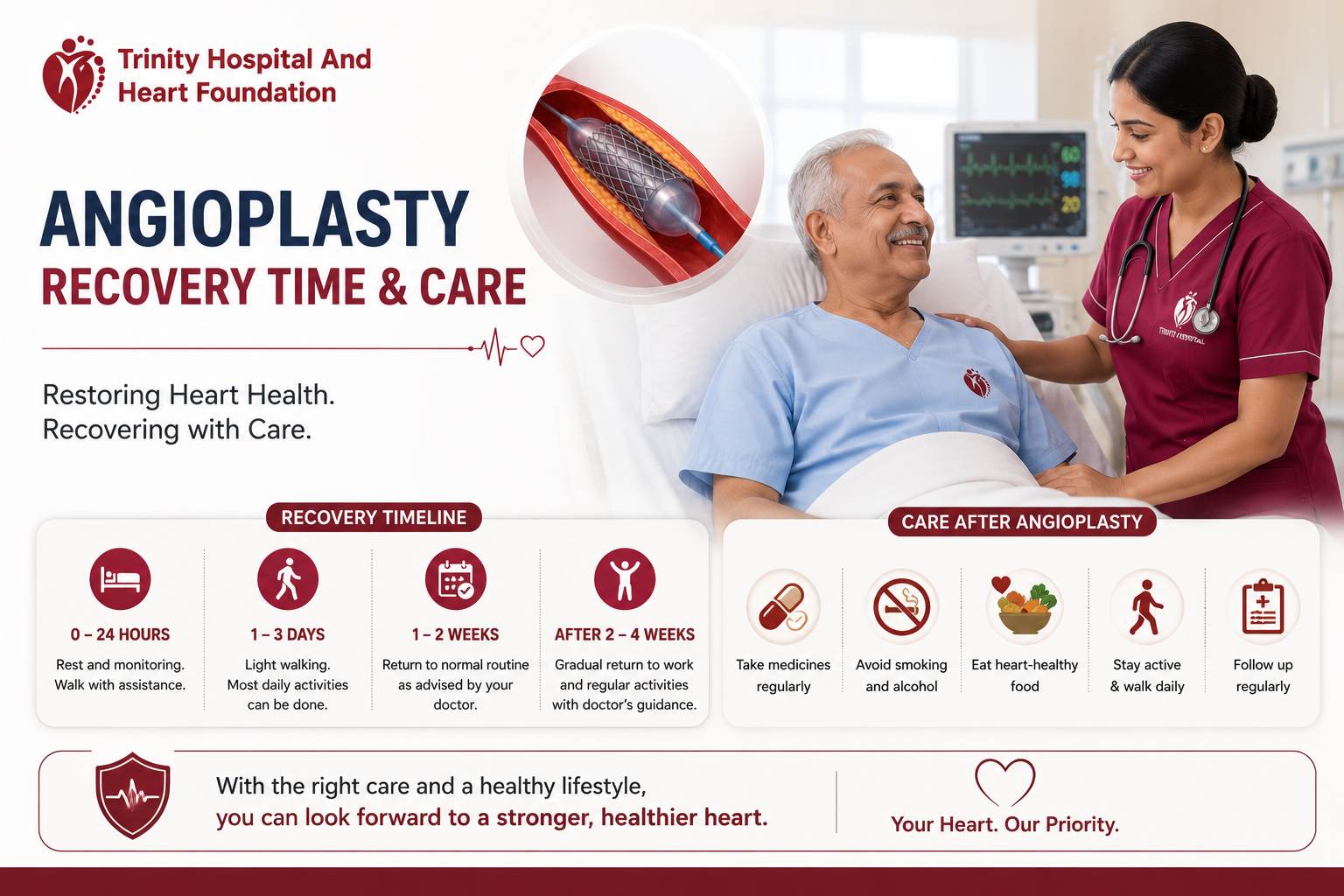
After the procedure, the medical team monitors:
Most angioplasty patients remain under observation for several hours or overnight depending on their condition.
Most patients:
During the first week:
Most patients gradually return to:
Many patients ask, “After angioplasty how many days rest should I take?”
The answer depends on:
Many patients can resume routine non-strenuous activities within a few days, while more physically demanding activities may require longer recovery.
Recovery following heart attack angioplasty may take longer than recovery after elective angioplasty.
Additional monitoring may be required for:
These patients often benefit from structured follow-up programs and long-term cardiovascular care.
Proper care after angioplasty is important for both recovery and prevention of future cardiac events.
Effective post angioplasty care helps reduce the risk of future cardiovascular complications.
Patients are generally advised to:
Following these precautions after angioplasty can support safer recovery and long-term heart health.
Apples are rich in fiber and antioxidants that may help support heart health and cholesterol management. They make a healthy snack option for patients recovering from angioplasty.
Berries such as strawberries, blueberries, and blackberries contain antioxidants that help reduce inflammation and support cardiovascular health. They can be included as part of a balanced heart-friendly diet.
Oranges provide vitamin C, fiber, and essential nutrients that contribute to overall heart health. Their natural potassium content may also support healthy blood pressure levels.
Leafy greens such as spinach, kale, and fenugreek leaves are packed with vitamins, minerals, and antioxidants. Regular consumption may support healthy circulation and cardiovascular function.
Oats are a good source of soluble fiber, which may help reduce LDL (bad) cholesterol levels. They are often recommended as part of a heart-healthy breakfast.
Brown rice provides fiber and essential nutrients while helping maintain steady energy levels. It is a healthier alternative to refined grains for long-term heart health.
Whole wheat bread, chapatis, and other whole grain foods contain more fiber and nutrients than refined grain products. They support better digestion and cardiovascular wellness.
Fish, especially varieties rich in omega-3 fatty acids, may support heart health and help maintain healthy cholesterol levels. Grilled or steamed fish can be a beneficial addition to a cardiac diet.
Skinless chicken and other lean poultry provide high-quality protein with lower saturated fat content. They help support recovery while promoting a heart-conscious eating pattern.
Lentils are rich in plant-based protein, fiber, and essential minerals that support cardiovascular health. They are a nutritious option for maintaining a balanced diet after angioplasty.
Beans provide protein, fiber, and important nutrients that may help support cholesterol management and heart health. They can be easily included in soups, salads, and main meals.
Nuts such as almonds and walnuts contain healthy fats, protein, and antioxidants that support heart health. Consuming them in moderation may contribute to a balanced cardiac diet.
Seeds including flaxseeds, chia seeds, and sunflower seeds provide healthy fats and fiber. They may help support cardiovascular wellness when included as part of a nutritious diet.
Olive oil is rich in monounsaturated fats and antioxidants that are associated with heart-friendly eating patterns. It can be used as a healthier alternative to saturated fats in cooking and salads.
An individualized after angioplasty diet chart may be recommended depending on diabetes, hypertension, kidney disease, and other health factors.
Although angioplasty is a commonly performed cardiac procedure, patients should be aware of possible post angioplasty complications.
Potential complications include:
Patients should seek immediate medical attention if they experience:
Successful recovery extends beyond the procedure itself.
Important long-term goals include:
Comprehensive angioplasty information empowers patients to actively participate in their cardiovascular health.
An angioplasty test or follow-up evaluation may include:
Regular follow-up helps monitor heart function and treatment outcomes.
Patients receive guidance on recovery, medications, lifestyle changes, and preventive cardiology.
Every recovery plan is personalized based on the patient’s clinical condition.
The hospital provides:
Serving patients from:
Chief Interventional Cardiologist
Qualifications:
Clinical Expertise:
Dr. B. G. Muralidhara has extensive experience in diagnosing and managing coronary artery disease, interventional cardiology procedures, and long-term cardiac rehabilitation through Trinity Hospital & Heart Foundation, Basavanagudi.
 24 Hour Emergency Aid