

img
img

Coronary Angiography in Bangalore

  • Home
  • Coronary Angiography in Bangalore

Quick Answer

Coronary angiography in Bangalore is a diagnostic procedure used to identify narrowing or blockages in the arteries supplying blood to the heart. It helps cardiologists evaluate chest pain, heart attack risk, shortness of breath, abnormal stress test results, and suspected coronary artery disease. At Trinity Hospital, Bangalore, coronary angiography, angioplasty, and comprehensive cardiac evaluation are performed by experienced specialists to guide treatment decisions.

What Is Coronary Angiography?

Coronary angiography is a specialized imaging procedure that uses contrast dye and X-ray technology to visualize blood flow within the coronary arteries.

The procedure helps identify:
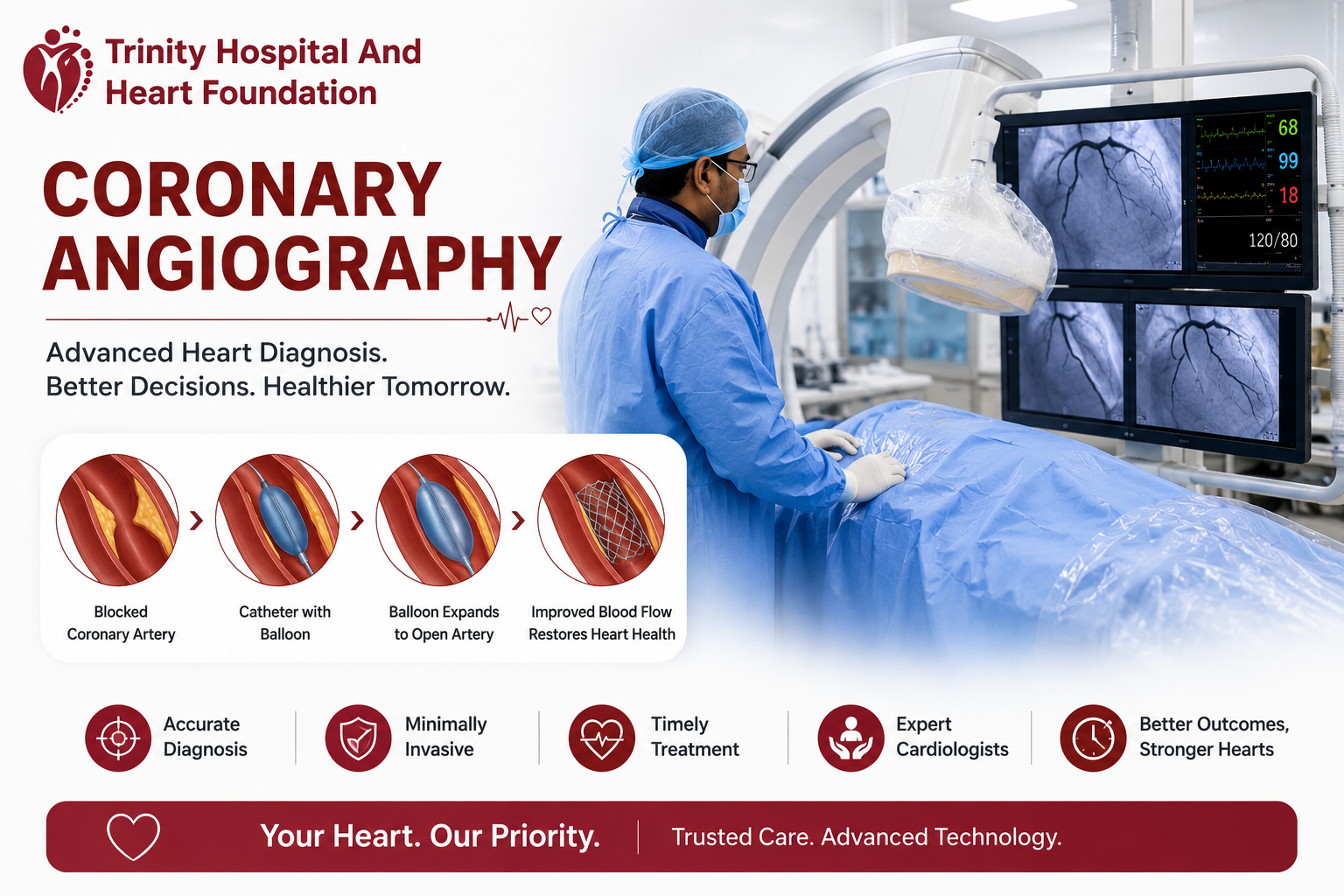
  • Coronary artery blockages
  • Narrowed arteries
  • Reduced blood flow to the heart
  • Severity of coronary artery disease
  • Causes of chest pain
  • Heart attack-related arterial obstruction

coronary angiography

Why Is Coronary Angiography Done?

A cardiologist may recommend coronary angiography for patients experiencing:

  • Chest pain (angina)
  • Shortness of breath
  • Abnormal ECG findings
  • Positive TMT or stress test
  • Previous heart attack
  • Suspected coronary artery disease

Common Angioplasty Indications After Angiography

Following angiography, treatment may include:

  • Medication management
  • Lifestyle modifications
  • Angioplasty
  • Percutaneous Transluminal Coronary Angioplasty (PTCA)
  • Rotablation Angioplasty
  • Coronary artery bypass surgery

Coronary Angiography and Angioplasty: What Is the Difference?

Coronary Angiography

Diagnostic Procedure

Coronary angiography is a specialized imaging test that helps cardiologists examine the condition of the coronary arteries. It provides detailed images of blood flow to the heart using contrast dye and X-ray technology.

Identifies Arterial Blockages

The procedure helps detect narrowed or blocked arteries that may reduce blood flow to the heart muscle. It also helps determine the location and severity of coronary artery disease.

Guides Treatment Planning

Based on the angiography findings, cardiologists can recommend the most appropriate treatment approach. This may include medications, lifestyle modifications, angioplasty, or bypass surgery depending on the extent of the blockage.

Angioplasty

Treatment Procedure

Angioplasty is a minimally invasive cardiac procedure used to open narrowed or blocked coronary arteries. It is often performed when angiography reveals significant blockages affecting blood flow to the heart.

Restores Blood Flow

The procedure improves circulation by widening the affected artery and restoring adequate blood supply to the heart muscle. This can help relieve symptoms such as chest pain and shortness of breath.

May Involve Balloon Dilation and Stent Placement

During angioplasty, a small balloon may be inflated to widen the narrowed artery. In many cases, a stent is placed to help keep the artery open and support long-term blood flow.

Types of Angioplasty

Balloon Angioplasty

A balloon is used to widen the narrowed artery.

Balloon Angioplasty Without Stent

In selected cases, artery widening may be performed without stent placement.

Percutaneous Transluminal Coronary Angioplasty (PTCA)

Percutaneous transluminal coronary angioplasty is a commonly performed minimally invasive procedure to open blocked coronary arteries.

Rotablation Angioplasty

Rotablation angioplasty+ may be recommended when arteries contain heavily calcified plaque that is difficult to treat using conventional techniques.

Laser Angioplasty

Laser angioplasty uses laser energy to modify arterial plaque before restoring blood flow in selected clinical situations.

Carotid Angioplasty

Carotid angioplasty is used to treat narrowing of the carotid arteries that supply blood to the brain.

Understanding Angioplasty Stent Types

Different angioplasty stent type may be recommended based on coronary anatomy and patient-specific requirements.

Drug-Eluting Stents (DES)

Drug-eluting stents are coated with medication that is gradually released into the artery after placement. This helps reduce the risk of the artery narrowing again and is commonly used in many angioplasty procedures.

Bare Metal Stents (BMS)

Bare metal stents are small mesh tubes that provide structural support to keep the artery open after angioplasty. They may be recommended in specific clinical situations based on the patient’s medical history and treatment needs.

Bioabsorbable Stents

Bioabsorbable stents are designed to support the artery temporarily and gradually dissolve over time. These stents allow the blood vessel to heal naturally while maintaining adequate blood flow during the recovery period.

The choice of stent depends on artery characteristics, overall health status, and specialist recommendations.

Angioplasty Risks and Potential Complications

While angioplasty is a commonly performed cardiac procedure, patients should understand possible angioplasty risks and treatment considerations.

Potential complications include:

  • Bleeding
  • Blood vessel injury
  • Blood clots
  • Restenosis
  • Rare cardiac complications

Complications After Angioplasty

Although uncommon, some patients may experience delayed complications that require follow-up evaluation and monitoring.

Care After Angioplasty

Proper post angioplasty care is essential for recovery and long-term heart health.

Precautions After Angioplasty

Patients are generally advised to:

  • Take medications as prescribed
  • Avoid smoking
  • Control blood pressure and diabetes
  • Attend follow-up visits
  • Follow dietary recommendations

Diet After Angioplasty

A heart-friendly diet after angioplasty may include:

  • Fruits and vegetables
  • Whole grains
  • Lean proteins
  • Reduced saturated fats
  • Limited processed foods

Angioplasty Recovery Time

Many patients ask about angioplasty recovery time after treatment.

Typical recovery may include:

  • Walking within a few hours
  • Hospital discharge within 1–3 days
  • Gradual return to normal activities
  • Ongoing cardiac follow-up

Recovery varies depending on the complexity of the procedure and overall health.

Comprehensive Coronary Artery Disease Management

Evaluation, intervention, recovery planning, and long-term follow-up are available under one roof.

Accessible Location in Basavanagudi,bangalore 

Easy Connectivity from Nearby Areas

  • Jayanagar: Approximately 10–15 minutes by road via RV Road and South End Circle.
  • Banashankari: Easily accessible through Kathriguppe Road and RV Road.
  • JP Nagar: Direct connectivity through Kanakapura Road and South Bangalore arterial roads.
  • Chamarajpet & Gandhi Bazaar: Short drive via Basavanagudi Main Road.
  • Majestic: Accessible within 15–20 minutes by road and metro connectivity.

Nearest Metro Stations

  • Lalbagh Metro Station (Green Line) is one of the closest metro stations, offering convenient access for patients travelling from different parts of Bangalore. The hospital’s location near Basavanagudi makes metro travel a practical option for consultations, diagnostics, and emergency care.
  • National College Metro Station (Green Line) is also located nearby, providing easy connectivity to South and Central Bangalore.

Nearby Landmarks

Patients can easily locate Trinity Hospital near several well-known landmarks, including:

  • RV Teachers College Circle
  • Rashtriya Vidyalaya (RV) Road
  • Basavanagudi
  • Gandhi Bazaar
  • Lalbagh Botanical Garden 

National College, Basavanagudi 

Understanding Angioplasty Cost in Bangalore

The angioplasty cost in Bangalore can vary based on:

  • Type of procedure performed
  • Number of arteries treated
  • Choice of stent
  • Hospital stay requirements
  • ICU support needs
  • Individual medical complexity

Patients should discuss estimated angioplasty cost and treatment planning with their cardiologist following diagnostic evaluation.

Why Choose Trinity Hospital for Advanced Cardiac Care?

Comprehensive Cardiology Evaluation

Patients receive detailed assessments using advanced cardiac diagnostics and imaging.

Specialist-Led Treatment Planning

Every case is reviewed individually to determine whether angioplasty, bypass surgery, or medical management is most suitable.

Emergency Heart Care Support

Rapid evaluation and treatment pathways are available for patients with acute cardiac symptoms.

Continuity of Care

From diagnosis and treatment to recovery and long-term heart health management, patients receive coordinated cardiac care.

Meet Our Specialist

Dr. B. G. Muralidhara

Chief Interventional Cardiologist

Dr. B. G. Muralidhara specializes in:

  • Coronary angiography
  • Angioplasty
  • Rotablation angioplasty
  • Carotid angioplasty
  • Coronary artery disease management
  • Interventional cardiology procedures
  • Preventive cardiology

Frequently Asked Questions About Angioplasty

Common questions and detailed answers about angioplasty procedures and recovery

Coronary angiography is used to identify blockages or narrowing in the coronary arteries.

Most patients experience minimal discomfort because local anesthesia is used.

The procedure generally takes between 20 and 45 minutes.

Angioplasty may be recommended when significant arterial narrowing or blockage is detected.

Percutaneous Transluminal Coronary Angioplasty (PTCA) is a minimally invasive procedure used to restore blood flow through blocked coronary arteries.

Rotablation angioplasty is used for heavily calcified arterial blockages that may not respond well to conventional techniques.

Drug-eluting stents, bare metal stents, and bioabsorbable stents are among the commonly used options.

Patients should follow medication schedules, maintain heart-healthy habits, and attend regular follow-up appointments.

Many patients resume routine activities within a few days depending on their condition. Many patients resume routine activities within a few days depending on their condition.

Costs vary based on the procedure, stent type, hospitalization needs, and individual clinical factors.