

Chest discomfort, breathlessness, or a family history of heart disease often leaves patients anxious about one question — "Is there a blockage in my heart?"
CT Coronary Angiography is a non-invasive heart imaging test designed to answer that question safely and accurately. At Trinity Hospital and Heart Foundation, Basavangudi, under the guidance of Dr. B.G. Muralidhara, this test is used to evaluate heart arteries early — often before symptoms become severe or complications develop.
The focus is clarity — understanding heart health clearly so the next step, if any, is well-informed and timely.
Patients from Basavangudi, Jayanagar, JP Nagar, VV Puram, Banashankari, and NR Colony frequently consult for cardiac evaluation.
CT Coronary Angiography is an advanced CT scan of the heart arteries. It helps doctors visualise blood flow, identify narrowing or blockages, and assess overall coronary artery health.
Unlike traditional angiography, this test:
It is commonly advised when doctors need a clear picture of heart arteries without immediately moving toward invasive procedures.
Calcium score CT coronary angiography is an additional measurement that estimates calcium deposits in heart arteries — helping assess future heart risk even before blockages develop.
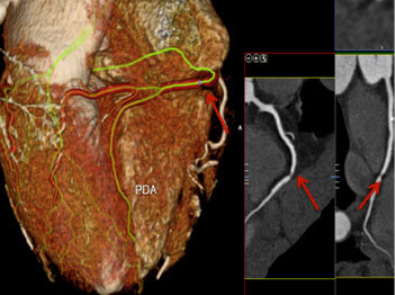
Your doctor may recommend a CT Coronary Angiography if you experience:
Chest pain or chest tightness during activity or at rest
Shortness of breath on exertion
Unexplained fatigue or reduced exercise tolerance
Irregular heartbeats or dizziness or fainting episodes
Strong family history of heart disease
Abnormal ECG or stress test results requiring further coronary assessment
Symptoms vary widely between individuals. This test is not meant for self-diagnosis.
This test is recommended only after a cardiologist's evaluation — it is not meant for self-diagnosis.
It is important to remember that CT coronary angiography is a diagnostic test. Results must always be interpreted by a cardiologist alongside clinical findings.
Consult a cardiologist if you are experiencing chest discomfort, breathlessness, or have a family history of heart disease and need to know whether a blockage is present — especially if you are searching for a clear, non-invasive heart blockage test.
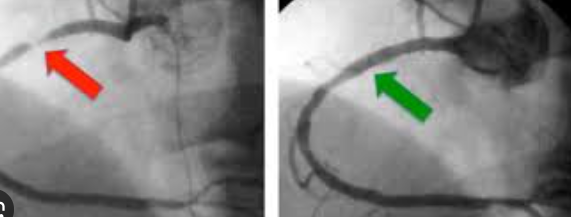
Patients often ask how CT coronary angiography compares to conventional coronary angiography. Understanding the difference helps in making an informed choice.
CT coronary angiography — non-invasive, no catheter insertion, completed in a short time, same-day discharge
Conventional coronary angiography — invasive, catheter guided through blood vessels, detailed real-time assessment
Calcium score CT — measures calcium deposits in heart arteries, estimates future risk before blockages develop
CT angiography as a gatekeeper — helps avoid unnecessary invasive angiography in suitable patients
<strong>Which test is best for checking heart blockage?</strong> The choice depends on symptoms, risk factors, and cardiologist evaluation. CT coronary angiography is often preferred for initial non-invasive assessment, with conventional angiography reserved for cases requiring more detailed or interventional evaluation.
Heart-related concerns are managed step by step. CT Coronary Angiography plays a diagnostic role within a broader care plan — not an automatic trigger for intervention.
If CT findings show mild or early changes:
Many patients do not require any procedure after this test and are managed conservatively. CT findings help confirm whether medical management is sufficient, providing objective reassurance.
How to reduce heart blockage if detected early? Through medicines, lifestyle changes, and regular follow-up under medical guidance — intervention is not always required.
If significant narrowing or blockages are detected:
The aim is always appropriate care, not immediate intervention. CT coronary angiography can reduce the need for unnecessary surgery by identifying who truly needs further evaluation versus who can be managed conservatively.
At Trinity Hospital and Heart Foundation, CT Coronary Angiography is used as a gatekeeper investigation — providing detailed artery mapping for precise clinical decisions.
Preparation before the test:
The procedure:
After the test:
At Trinity Hospital and Heart Foundation, CT Coronary Angiography is supported by structured imaging and clinical reporting.
Strength of the test at Trinity Hospital:
EMI & Payment Options:
Mediclaim & Insurance Coverage:
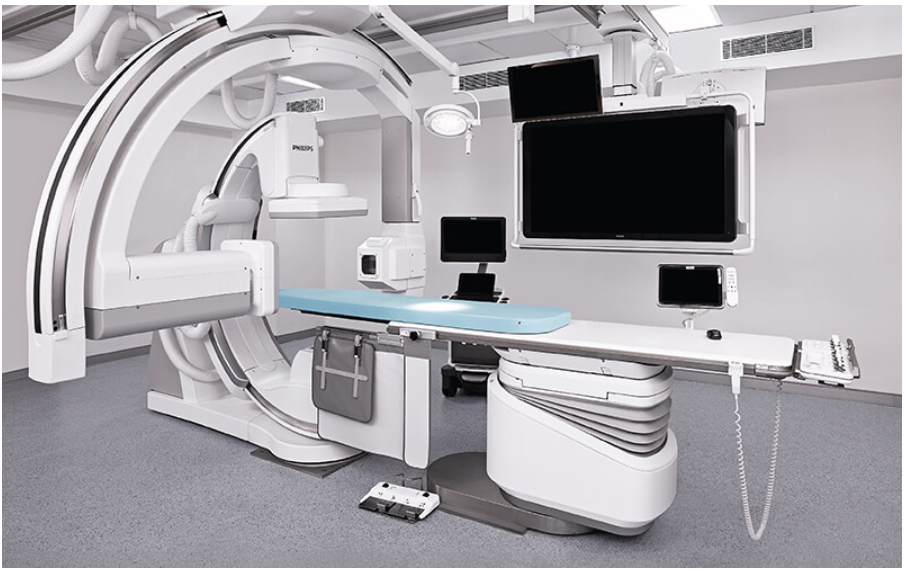
Non-invasive advanced CT scan of heart arteries providing detailed coronary artery maps without catheter insertion. Preferred for initial non-invasive assessment of blockages. Allows same-day discharge, is painless, and helps avoid unnecessary invasive procedures in suitable patients.
Measures calcium deposits in heart arteries to estimate future cardiovascular risk — even before significant blockages develop. Used for early risk assessment in patients with risk factors such as family history, diabetes, or high cholesterol. Guides preventive care decisions.
Invasive catheter-based procedure providing real-time detailed coronary artery assessment. Reserved for patients where CT findings are inconclusive or when intervention is anticipated. Allows simultaneous diagnosis and treatment (angioplasty or stenting) in the same session.
Treadmill stress test, stress echocardiography, or nuclear stress testing may be advised as complementary or alternative investigations depending on symptoms and clinical findings. Method selection depends on individual patient needs, not a one-size-fits-all approach.
After the CT scan, results are reviewed and explained by Dr. B.G. Muralidhara in the full context of your symptoms, history, and risk factors.
Depending on findings, next steps may include:
Recovery after the test:
Most patients resume normal activities the same day. The test is painless and does not require hospital admission in most cases. Hydration guidance may be provided following contrast dye use.

If you are searching for "CT coronary angiography near me" or need clarity on a heart blockage test, a consultation at Trinity Hospital and Heart Foundation, Basavangudi can help determine whether this investigation is right for you.
Why patients choose Trinity Hospital for CT Coronary Angiography:
Financial support available:
At Trinity Hospital and Heart Foundation, CT Coronary Angiography is part of a structured, guideline-based cardiac evaluation pathway. Results are interpreted by Dr. B. G. Muralidhara in full clinical context — with the aim of providing clarity and avoiding unnecessary intervention wherever possible.
Trinity Hospital and Heart Foundation, Bangalore
Dr. B. G. Muralidhara has extensive clinical experience of 30+ years in managing heart conditions and has been involved in the evaluation and treatment of a large number of patients with coronary artery disease.
His clinical work includes CT coronary angiography interpretation, diagnostic and conventional coronary angiography, angioplasty procedures, and long-term cardiac care planning. Patients often consult him for clear explanations of imaging results, second opinions, and guidance on whether findings require intervention or conservative management is sufficient.

Common questions and detailed answers about CT coronary angiography, heart blockage testing, and coronary evaluation
CT coronary angiography is non-invasive — no catheter is inserted. It uses a CT scanner and contrast dye to image heart arteries. Conventional coronary angiography involves catheter insertion through blood vessels into the heart and is used when more detailed or interventional assessment is needed.
No. It is painless and usually completed within a short time. A contrast dye is administered through an IV line, and the patient lies still in the CT scanner.
You may be advised fasting, medication adjustment, and hydration before the test. Detailed preparation instructions are provided when the appointment is scheduled.
Yes. It helps detect and assess heart artery blockages accurately and non-invasively. It provides detailed coronary artery maps without catheter insertion.
The choice depends on symptoms, risk factors, and cardiologist evaluation. CT coronary angiography is often preferred for initial non-invasive assessment, with conventional angiography reserved for cases requiring detailed or interventional evaluation.
It measures calcium deposits in heart arteries, helping estimate future cardiovascular risk. It is useful for early risk assessment in patients with risk factors such as family history, diabetes, or high cholesterol — even before significant blockages develop.
In many patients, yes — by identifying who truly needs further intervention versus who can be managed conservatively with medications and lifestyle changes.
Most patients resume normal activities the same day. The test does not require hospital admission in most cases. Hydration guidance may be provided after contrast dye use.
Through medicines to control cholesterol, blood pressure, and blood sugar, combined with lifestyle changes such as diet improvement, exercise, and stress management — all under medical guidance. Intervention is not always required for early blockages.
When performed under expert supervision with appropriate patient selection, CT coronary angiography is considered safe and widely used. Your cardiologist will advise if any specific considerations apply to your situation.
Looking for a non-invasive heart blockage test near you? Schedule your CT Coronary Angiography consultation at Trinity Hospital and Heart Foundation, Basavangudi Bengaluru for expert, clarity-driven cardiac evaluation.
+91 8040136999
trinityheartfoundation@gmail.com
Trinity Hospital and Heart Foundation, Basavangudi, Bengaluru, Karnataka
 24 Hour Emergency Aid