

A Dobutamine Stress Echo is a specialised cardiac stress test used to evaluate how well the heart functions when it is under stress. At Trinity Hospital and Heart Foundation, Basavangudi, this test is commonly advised for patients who are unable to perform physical exercise on a treadmill but still need an accurate assessment of heart blood flow and muscle function.
Many heart-related symptoms—such as unexplained chest discomfort, breathlessness, or fatigue—are not always visible at rest. This test helps cardiologists understand whether the heart is receiving adequate blood supply during stress, allowing for early and informed medical decisions without jumping straight to invasive procedures.
Patients from Basavangudi, Jayanagar, JP Nagar, VV Puram, Banashankari, and NR Colony frequently consult for cardiac evaluation.
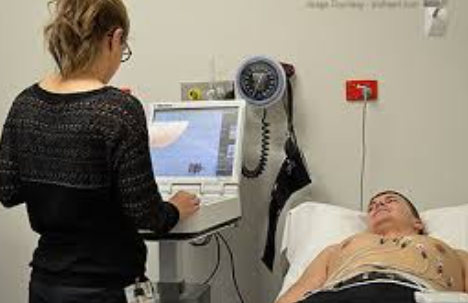
A Dobutamine Stress Echocardiogram—often referred to as a DSE test, DSC test heart, or echo stress test—combines two elements:
Dobutamine gently increases the heart rate and workload, similar to what happens during physical exercise. While the heart is under this controlled stress, ultrasound images are taken to assess heart muscle movement and blood flow.
This test helps doctors:
Your doctor may recommend an echo stress test if you experience:
Chest pain or pressure during activity or at rest
Shortness of breath during mild activity
Unexplained fatigue or reduced exercise tolerance
Dizziness or fainting episodes
Abnormal ECG findings requiring further cardiac assessment
Known heart disease requiring follow-up or pre-surgical cardiac evaluation
Symptoms and risk levels vary from person to person. This test should not be used for self-diagnosis.
This test is only advised after a cardiologist's evaluation and should not be used for self-diagnosis.
It is important to remember that symptoms alone do not confirm the need for a dobutamine stress echo. A cardiologist's evaluation determines the appropriate test.
Consult a cardiologist if you experience chest pain, breathlessness, or fatigue and have been unable to complete a treadmill stress test, or if you need pre-surgical cardiac assessment and standard tests have been inconclusive.
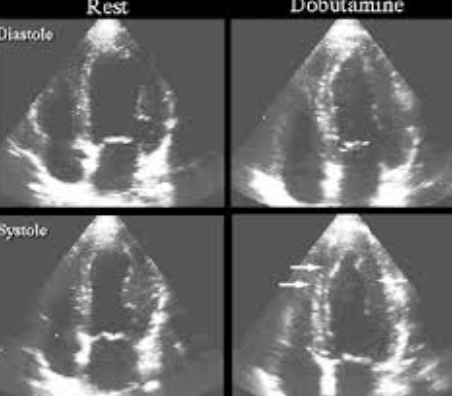
Understanding what the dobutamine stress echo measures helps patients prepare and know what to expect.
Dobutamine medication gradually increases heart rate and workload — simulating the effect of physical exercise
Real-time ultrasound images taken at rest, low stress, peak stress, and recovery — assessing wall motion changes
Heart muscle movement assessed — areas of reduced motion indicate possible reduced blood flow
Stress test vs 2D echo — resting echo shows structure; stress echo reveals function under demand
<strong>What does "echo" mean as a medical abbreviation?</strong> "Echo" refers to echocardiography — an ultrasound-based heart imaging technique. The dobutamine stress echo combines this imaging with a pharmacological stress agent to evaluate the heart under conditions that mimic physical exertion.
Heart-related symptoms do not always mean surgery is required. Care decisions are made step by step, based on test findings and patient condition.
In many cases, symptoms can be managed through:
A dobutamine stress echo test often helps confirm whether medication-based management is sufficient or if further evaluation is needed. Many patients receive reassurance from a normal stress echo and are managed conservatively without any intervention.
Interventional or surgical treatments are considered only when:
Even then, decisions are made after detailed discussion, imaging correlation, and patient consent. Stress echo findings alone do not determine the need for surgery or intervention — they are one piece of the full clinical picture.
At Trinity Hospital and Heart Foundation, Dr. B.G. Muralidhara emphasises non-invasive diagnostics first with precise interpretation of stress echocardiogram findings and individualised treatment planning.
The DSE test procedure step by step:
Duration: Typically 30–45 minutes, including preparation and recovery.
Eating before the test: Your doctor will advise — usually light fasting is recommended before the procedure.
The test is preferred in suitable patients because it avoids radiation exposure, is safe for patients unable to exercise, and provides real-time heart muscle assessment.
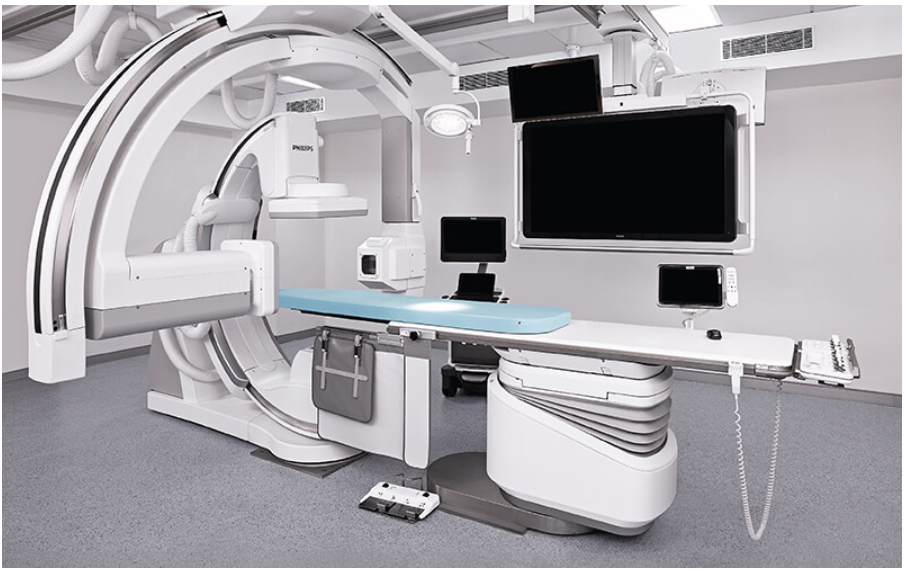
The Dobutamine Stress Echo at Trinity Hospital and Heart Foundation is performed in a supervised cardiac imaging environment with continuous monitoring and expert physician interpretation.
Facility includes:
EMI & Payment Options:
Mediclaim & Insurance Coverage:
Pharmacological stress test using dobutamine combined with real-time echocardiography. Used for patients unable to exercise adequately on a treadmill. Avoids radiation, provides real-time wall motion assessment, and is safe under continuous physician supervision. Preferred when standard treadmill stress testing is not possible.
Exercise-based cardiac stress test using a treadmill. Used for patients who can exercise adequately and provides direct correlation between physical exertion and ECG changes. Complementary to or an alternative of DSE depending on patient fitness and clinical question.
Uses a small amount of radioactive tracer to assess blood flow to the heart muscle under stress. Provides detailed perfusion imaging to identify areas of reduced blood supply. Advised when echocardiography-based stress testing is inconclusive or when detailed perfusion data is required.
CT coronary angiography provides detailed non-invasive imaging of coronary artery anatomy. Cardiac catheterisation (invasive) provides definitive coronary assessment when non-invasive findings are inconclusive. The choice of test depends on age, symptoms, medical history, and prior investigations.
After the DSE test, the cardiologist reviews findings in the context of your symptoms, clinical history, and other investigations.
Depending on findings, next steps may include:
What patients feel during and after the test:
Most patients feel mild palpitations or warmth during the dobutamine infusion — these subside quickly after the test stops. The test is performed under continuous monitoring, and the physician is present throughout to ensure safety.

At Trinity Hospital and Heart Foundation, Basavangudi, Dr. B.G. Muralidhara and the cardiology team focus on clarity-driven diagnosis, ethical recommendations, and patient reassurance—helping you understand your heart health before deciding the next step.
The consultation includes:
Financial support available:
At Trinity Hospital and Heart Foundation, the Dobutamine Stress Echo is part of a structured, physician-supervised cardiac evaluation pathway. Results are interpreted by Dr. B. G. Muralidhara in the full context of each patient's symptoms, history, and overall heart health — with a focus on clarity and avoiding unnecessary procedures.
Trinity Hospital and Heart Foundation, Bangalore
Dr. B. G. Muralidhara has extensive clinical experience of 30+ years in managing heart conditions and has been involved in the evaluation and treatment of a large number of patients with coronary artery disease.
His clinical work includes stress echocardiography interpretation, diagnostic angiography, angioplasty procedures, and long-term cardiac care planning. Patients often consult him for clear explanations of stress echo results, second opinions, and guidance on whether findings require further investigation or medical management is sufficient.

Common questions and detailed answers about DSE test, echo stress test, and cardiac stress evaluation
It is a heart test that checks how well your heart works under stress using ultrasound imaging. Dobutamine medication is used to increase the heart's workload, and echocardiography images are taken to assess muscle movement and blood flow.
Yes. It is performed under continuous monitoring by experienced cardiac teams with a physician present throughout. The medication dose is carefully controlled and stopped immediately if any concern arises.
A 2D echo looks at the heart at rest — showing its structure and basic function. A stress echocardiogram evaluates heart muscle movement and blood flow under stress, revealing abnormalities that may not be visible at rest.
Patients who cannot exercise adequately on a treadmill but need a cardiac stress assessment. Also used for pre-surgical cardiac evaluation and follow-up in known heart disease patients.
Most patients feel mild palpitations or warmth during the dobutamine infusion. These subside quickly after the test stops and are managed by the physician throughout.
Typically 30–45 minutes, including preparation and recovery monitoring.
Your doctor will advise specifically. Usually light fasting is recommended before the procedure. Follow the instructions provided at the time of appointment booking.
"Echo" refers to echocardiography — an ultrasound-based heart imaging technique that uses sound waves to create real-time moving images of the heart's structure and function.
It can indicate reduced blood flow to areas of the heart muscle, suggesting possible blockage. However, further tests such as CT coronary angiography or cardiac catheterisation may be needed for definitive confirmation.
Yes. The test is available at Trinity Hospital and Heart Foundation, Basavangudi, Bangalore. Consult Dr. B.G. Muralidhara for evaluation and to determine if this test is appropriate for your condition.
Experiencing chest pain, breathlessness, or fatigue and need a cardiac stress evaluation without a treadmill? Schedule your Dobutamine Stress Echo at Trinity Hospital and Heart Foundation, Basavangudi Bengaluru for expert, clarity-driven cardiac assessment.
+91 8040136999
trinityheartfoundation@gmail.com
Trinity Hospital and Heart Foundation, Basavangudi, Bengaluru, Karnataka
 24 Hour Emergency Aid