
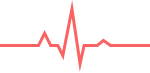
Holter monitoring is a simple, non-invasive heart rhythm test used when routine ECGs do not capture symptoms that come and go. At Trinity Hospital and Heart Foundation, Basavangudi, this test is commonly advised for patients experiencing unexplained palpitations, dizziness, or irregular heartbeats.
Under the care of Dr. B.G. Muralidhara, Holter monitoring helps doctors understand how your heart behaves during normal daily activities—while you walk, rest, sleep, or feel symptoms. The goal is clarity, not urgency: identifying whether your symptoms are heart-related and what steps, if any, are needed next.
Patients from Basavangudi, Jayanagar, JP Nagar, VV Puram, Banashankari, and NR Colony frequently consult for cardiac evaluation.
A Holter monitor is a small wearable ECG device that continuously records your heart's electrical activity over an extended period—most commonly 24 to 48 hours.
Unlike a standard ECG that records just a few seconds, an ECG Holter monitor tracks heart rhythm patterns over time. This makes it especially useful for detecting intermittent arrhythmias of the heart that may not appear during a clinic visit.
Holter monitoring purpose is diagnostic. It helps doctors:
Your doctor may recommend Holter monitoring if you experience:
Frequent or occasional palpitations
Irregular or rapid heartbeat
Episodes of dizziness or lightheadedness
Unexplained fainting or near-fainting episodes
Fatigue without a clear cause
Chest discomfort with normal ECG results during clinic visit
Symptoms vary widely. Some patients have clear discomfort, while others have no symptoms at all. Self-diagnosis based on symptoms alone is not reliable.
Always consult a cardiologist — self-diagnosis based on symptoms alone is not reliable, and Holter results require expert interpretation.
It is important to remember that Holter monitoring is a diagnostic tool. Results must be interpreted alongside symptoms and clinical history.
Consult a cardiologist if you experience recurring palpitations, dizziness, fainting, or an irregular heartbeat — especially if a routine ECG has come back normal and symptoms continue.
Understanding what the monitor records helps patients know what to expect during and after the monitoring period.
Irregular heart rhythms — fast, slow, or skipped beats occurring during daily activities
Ventricular arrhythmia — potentially significant rhythm disturbances requiring further evaluation
Pauses or conduction delays in heart electrical activity that may explain fainting or dizziness
Sinus arrhythmia — a natural heart rate variation, often harmless, especially in younger individuals
<strong>What are abnormal Holter monitor results?</strong> They may include frequent skipped beats, sustained fast rhythms, significant pauses, or ventricular arrhythmia patterns that need further evaluation. Many findings, however, are benign and require only reassurance.
Holter monitoring itself is a diagnostic tool, not a treatment. The findings guide the next steps in a careful, step-by-step manner.
If Holter results show mild or manageable rhythm variations:
For many patients, reassurance and observation are all that's required—especially in cases like sinus arrhythmia, which can be normal in some individuals. Holter monitoring helps avoid unnecessary procedures by providing objective evidence of what the heart is actually doing.
If significant rhythm issues such as ventricular arrhythmia or persistent cardiac arrhythmia are detected:
There is no one-size-fits-all approach. All decisions are based on clinical judgment — not device findings alone.
Holter monitoring is a straightforward, wearable test that records your heart rhythm during your normal daily routine.
The process step by step:
Important restrictions during monitoring:
At Trinity Hospital and Heart Foundation, Holter monitoring is integrated into a structured cardiac evaluation pathway led by Dr. B.G. Muralidhara with accurate interpretation and clinical correlation.
Facility includes:
Holter monitoring cost & transparency:
EMI Options & Mediclaim Support:
A wearable ECG Holter monitor records continuous heart rhythm over 24 to 48 hours during normal daily activities. The 48-hour Holter monitor increases the chance of detecting intermittent arrhythmias that do not occur every day. Ideal for patients with frequent or daily symptoms.
Used for less frequent symptoms that a 48-hour Holter may miss. The patient wears the device for a longer period (days to weeks) and activates it when symptoms occur. Suitable when palpitations or dizziness happen infrequently and unpredictably.
A treadmill or pharmacological stress test assesses heart rhythm and blood flow during physical exertion. Used when symptoms are specifically triggered by activity. Complements Holter findings by evaluating exercise-induced rhythm changes.
Echocardiography assesses heart structure alongside rhythm findings. Advanced electrophysiology studies are used for complex or sustained arrhythmias requiring detailed mapping. Method choice depends on symptom frequency, severity, and overall heart health.
After returning the Holter monitor, the data is analysed and the cardiologist reviews findings in full clinical context.
Depending on findings, next steps may include:
Holter monitor side effects:
Side effects are minimal. Some patients may experience mild skin irritation from the adhesive electrodes — this resolves after the monitor is removed. There is no radiation, no electrical stimulation, and no discomfort during the monitoring period itself.

If you've been advised Holter monitoring or are experiencing unexplained palpitations, dizziness, or irregular heartbeat, consult Dr. B.G. Muralidhara at Trinity Hospital and Heart Foundation, Basavangudi, Bangalore.
The consultation focuses on:
Financial support is available:
The goal is not just to record heart rhythm—but to understand what it means for your health and guide you clearly toward the right next step.
At Trinity Hospital and Heart Foundation, Holter monitoring is part of a structured, physician-led cardiac evaluation pathway. Results are interpreted by Dr. B. G. Muralidhara in the full context of each patient's symptoms, history, and overall heart health — not as isolated device data.
Trinity Hospital and Heart Foundation, Bangalore
Dr. B. G. Muralidhara has extensive clinical experience of 30+ years in managing heart conditions including arrhythmias, rhythm disorders, and cardiac arrhythmia symptoms.
His clinical work includes Holter monitoring interpretation, diagnostic angiography, and long-term cardiac care planning. Patients often consult him for clear explanations of Holter results, second opinions, and guidance on whether the findings require intervention or simply reassurance and monitoring.

Common questions and detailed answers about Holter monitoring, arrhythmia detection, cost, and results
It detects irregular heart rhythms, pauses, fast or slow heartbeats, ventricular arrhythmia patterns, and rhythm changes related to your daily activities and symptoms.
A 48-hour Holter monitor increases the chance of detecting intermittent arrhythmias that don't occur every day. It is used when symptoms are frequent but not constant, and a 24-hour recording may not capture them.
No. It is completely painless and non-invasive. Electrodes are placed on the skin and the monitor is worn like a small device throughout the day and night.
Yes. You should avoid bathing, swimming, or activities that may dislodge the electrodes. Normal daily activities are encouraged — the test is designed to capture real-world heart behaviour.
Yes. It helps correlate recorded rhythm changes with symptoms you note in your diary during monitoring — connecting what the heart is doing with what you feel at that moment.
Sinus arrhythmia is a natural variation in heart rate, often seen in younger individuals and linked to breathing. It is usually harmless and requires reassurance rather than treatment.
They may include frequent skipped beats, sustained fast rhythms, significant pauses, or ventricular arrhythmia patterns that need further evaluation. Many findings are benign — context and clinical interpretation are essential.
Side effects are minimal. Some patients may experience mild skin irritation from the adhesive electrodes. This resolves after the monitor is removed. There is no radiation or electrical stimulation involved.
Holter monitoring cost varies based on duration (24 or 48 hours) and reporting complexity. At Trinity Hospital and Heart Foundation, exact estimates are provided transparently after consultation — with no hidden charges.
Only a qualified cardiologist should interpret results in the context of your symptoms and medical history. Holter data without clinical context can be misleading — self-interpretation is not recommended.
Experiencing unexplained palpitations, dizziness, or irregular heartbeat? Schedule your Holter monitoring and cardiac consultation at Trinity Hospital and Heart Foundation, Basavangudi Bengaluru for expert evaluation and clear answers.
+91 8040136999
trinityheartfoundation@gmail.com
Trinity Hospital and Heart Foundation, Basavangudi, Bengaluru, Karnataka
 24 Hour Emergency Aid